How Long Is It To Saona Island From Punta Cana?
Door-to-door timing for a Saona Island trip from Punta Cana: the drive to Bayahibe, the boat crossing, the full-day timetable, and which tours run longest.
Saona Island sits inside Parque Nacional Cotubanamá, and every boat that reaches it leaves from the Bayahibe pier area on the Caribbean coast. That single geographic fact explains almost everything about timing for Punta Cana visitors: there is no direct departure from Punta Cana or Bavaro beaches, so the day starts with a road transfer, then a boat crossing, then island time, then the same two legs in reverse. Roster listings across the 40 tours this site covers run about 6 to 12 hours door to door, which is a wide spread, and the difference comes down to where you start, which boat you take and how many stops the itinerary includes. If you want to see how the whole day actually runs, the guide to Saona Island excursions from Punta Cana walks through hotel pickup, the drive to Bayahibe, the boat crossing and what the price really bundles.
This page breaks the question into its parts: the drive from Punta Cana to the Bayahibe pier, the boat crossing itself, a realistic hour-by-hour timetable, and which tour formats buy you back time or cost you more of it. It also covers the seasonal factors that nudge the clock, and what a short-stay visitor can realistically squeeze in. Once you have the timing figured out, the full guide to the Saona Island tour from Punta Cana walks you through pickup windows, prices, and exactly what your day on the water includes.
Expect roughly six to twelve hours door to door, with about eight to eleven hours being the most common band for Punta Cana hotel guests. The road transfer to the Bayahibe pier takes about an hour each way, and the crossing usually runs 20 to 60 minutes by speedboat or 1 to 2 hours by catamaran, depending on sea conditions and the operator.
The spread matters more than a single number. A fast speedboat format from a hotel close to the highway can compress the whole day toward the six or seven hour mark. A large catamaran combo that leaves later, stops at the natural pool on the way out, serves lunch on the island and sails back under power sits at the other end. When operators on the live listings print durations, the band of 7 to 11 hours covers most of what Punta Cana guests actually book.
Pickups usually begin between 6:30 and 8:00 AM depending on the hotel zone, so the day also starts earlier than many travelers expect. Hotels at the far northeast end, such as Uvero Alto and Macao, sit furthest from the Bayahibe pier, so pickups there add meaningful minutes to the transfer. If a lie-in is part of the vacation plan, the departure time on the listing is worth reading as closely as the price.
A useful mental model is to think of the day as four blocks rather than one number: the road leg out, the water leg out, the island block, and the two return legs. Only the island block is flexible in any real sense, because operators control how long the boats stay moored. Everything else is physics and traffic. Once you see the day that way, comparing listings becomes a matter of asking which blocks each tour shrinks, stretches or stacks with extras like a natural pool swim or a beach-club hour.
For readers ready to compare, these three formats bracket the range: the classic full-day trip, a similar all-inclusive variant, and the premium option.
How Long Is The Drive From Punta Cana To The Bayahibe Pier?
The drive from Punta Cana airport to the Bayahibe pier takes about 58 minutes over roughly 70 kilometers, and from the Bavaro hotel zone about 59 minutes, per route-computed estimates on free-flowing roads. Operators quote 60 to 90 minutes from Bavaro in real traffic, so budget an hour to an hour and a half each way.
The route is the Autopista del Coral, a modern toll highway that runs down the coast from the Punta Cana area through Higuey and La Romana to Bayahibe. It is a good road, and in free-flowing conditions the machine-computed times above hold. But tour vans collect guests across several hotel zones before heading south, so the clock starts when the first pickup happens, not when your own door opens. That collection loop is why operators quote the longer range.
Here is how the main starting points compare, using route-computed free-flow times:
| Starting point | Drive to Bayahibe pier | Approximate distance |
|---|---|---|
| Punta Cana airport (PUJ) | about 58 minutes | about 69.7 km |
| Bavaro hotel zone | about 59 minutes | not published |
| Uvero Alto | about 82 minutes | not published |
| La Romana | about 24 minutes | about 24.0 km |
| Dominicus | about 6 minutes | about 3.9 km |
| Santo Domingo | about 113 minutes | about 133.9 km |
Two practical points follow from the table. First, guests staying in Bayahibe or Dominicus itself skip the long transfer entirely, which is why the Bayahibe and La Romana departures run shorter days than Punta Cana ones at the same itinerary. Second, Santo Domingo guests face the longest drive of the common departure cities, and the Santo Domingo departure guide covers how those tours budget the extra two hours each way.
A third point is subtler: the transfer is not dead time, but it is not scenery time either. The highway runs past sugar cane and cattle country around Higuey and La Romana rather than along the coast, so travelers picturing an ocean-view drive should recalibrate. Most vans are air-conditioned and the toll road is smooth, but a motion-sensitive passenger may want a seat near the front and a light breakfast, since the pickup window lands before most hotel buffets are at full service.
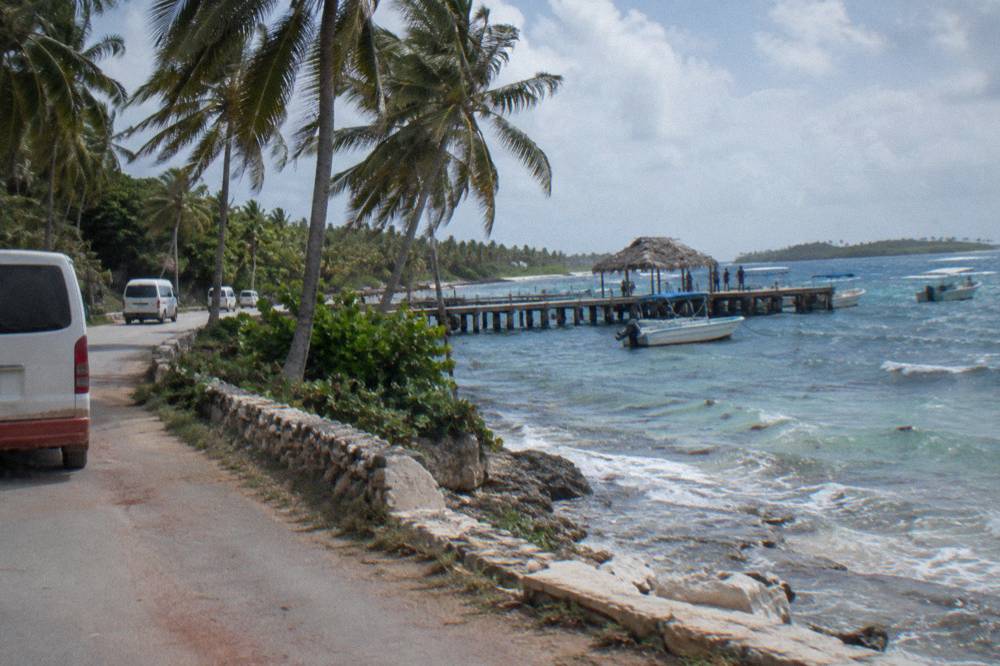
A note on the pier itself: in December 2025 a new visitor parking facility with sidewalks, drainage and a pedestrian bridge was inaugurated at Playa Bayahibe to ease congestion at the embarkation points. Reports since then describe normal flows at the piers, so the transfer estimate above is not being inflated by construction.
How Long Is The Boat Ride To Saona Island?
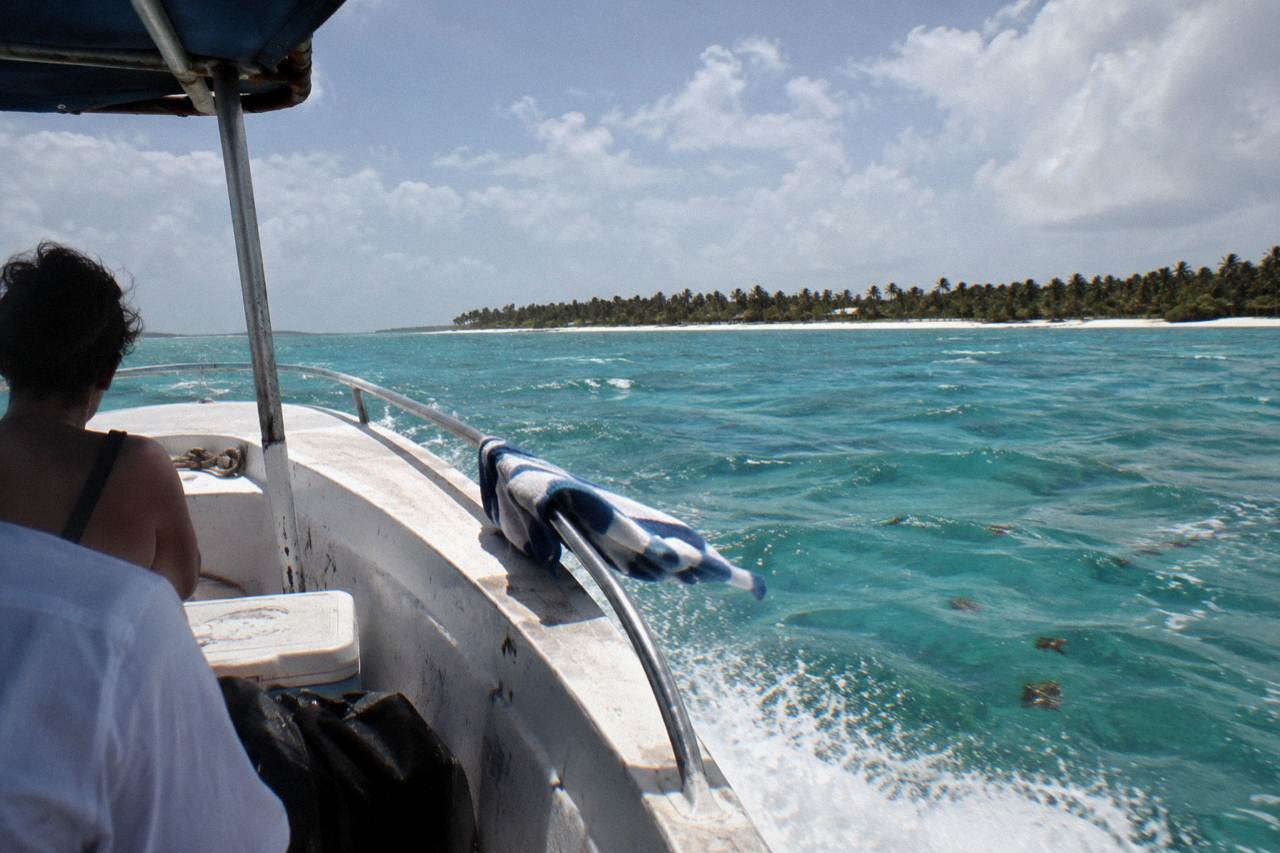
The crossing usually takes 20 to 60 minutes by speedboat and 1 to 2 hours by catamaran, depending on sea state and the operator's route. Many mixed itineraries run speedboat out and catamaran back, so the same tour can have a short leg one way and a long, party-paced leg the other. If you're still mapping out the full day, our guide to boat ride times from Bayahibe to Saona Island explains how your departure point and vessel choice change the schedule.
The numbers are approximate because the departure point inside the Bayahibe pier area, the landing beach on Saona and the sea that day all vary. Canto de la Playa, the main beach and Mano Juan are the common landings, and they sit at different distances from the marina. A fast boat running straight out to the beach with no intermediate stop is at the short end. A catamaran that stops at the natural pool at Palmilla, where trips usually pause 30 to 45 minutes in waist-deep water, stretches the water time considerably, though that stop is a highlight rather than dead time.
The type of boat is the biggest lever on the clock. The speedboat tour format trades cushioned lounging for time saved, which matters for anyone with a dinner reservation or a flight the same evening. The catamaran format makes the crossing part of the day: music, drinks and sun instead of a transfer.
The Paradise From Punta Cana listing is a good example of the mixed-leg format, where the outbound and return legs differ in both boat and length.
Sea conditions, not distance, are what move the crossing time most. Operators report that dry-season days from December to April tend to run calmer, while fresh trade winds can lengthen a catamaran leg noticeably. Tours are sometimes altered or canceled for rough seas, and operator-canceled trips are typically refunded in full, a detail worth confirming on the listing before you book.
One practical detail about the boats themselves: a speedboat crossing is open to the wind and spray, so a light layer and a secure hat serve better than a wide-brimmed beach hat that will not survive the open-boat wind. The catamaran leg is the reverse, shaded seating and a bar, but slower, and on a breezy afternoon the last half hour can feel long for small children or anyone prone to seasickness. The what to bring guide covers the packing side of both legs in detail.
What Does A Realistic Saona Day Look Like Hour By Hour?
A typical Punta Cana day runs like this: pickup between 6:30 and 8:00 AM, about an hour on the road, boarding and the crossing through late morning, island time with a buffet lunch around midday, a natural pool stop of 30 to 45 minutes, then the return crossing and drop-off between roughly 3:00 and 6:00 PM, for eight to eleven hours total.
That skeleton flexes by format. A speedboat-first itinerary can put you on the sand before 11:00 AM. A catamaran-out trip may not land until early afternoon and returns later, which is why some listings show 11 or 12 hour door-to-door durations. The table below maps a common mixed itinerary onto the clock:
| Time | Stage |
|---|---|
| 6:30 to 8:00 AM | Hotel pickup, usually by hotel zone |
| 8:00 to 9:00 AM | Drive to the Bayahibe pier area |
| 9:00 to 9:30 AM | Check-in, wristbands, boarding |
| 9:30 to 10:30 AM | Speedboat crossing to Saona |
| 10:30 AM to 1:30 PM | Beach time and buffet lunch on the island |
| 1:30 to 2:15 PM | Natural pool stop at Palmilla |
| 2:15 to 4:00 PM | Catamaran return crossing |
| 4:00 to 5:00 PM | Road transfer back to the hotel zone |
Two things eat into that plan that no operator can schedule around. The first is the pickup loop: a van collecting guests across Bavaro can spend 45 minutes before the highway. The second is boarding at the pier, where wristband issue and group assembly take real time on busy mornings. Neither is hidden cost, but both explain why a day that "should" take eight hours often prints as ten on the listing.
Lunch on the standard trips is a Dominican buffet, grilled chicken or fish, rice, salads and fruit, with an open bar of rum drinks, beer and soft drinks on most rosters that list inclusions. The full itinerary guide walks through what each stop actually looks like in more depth than a clock column can.
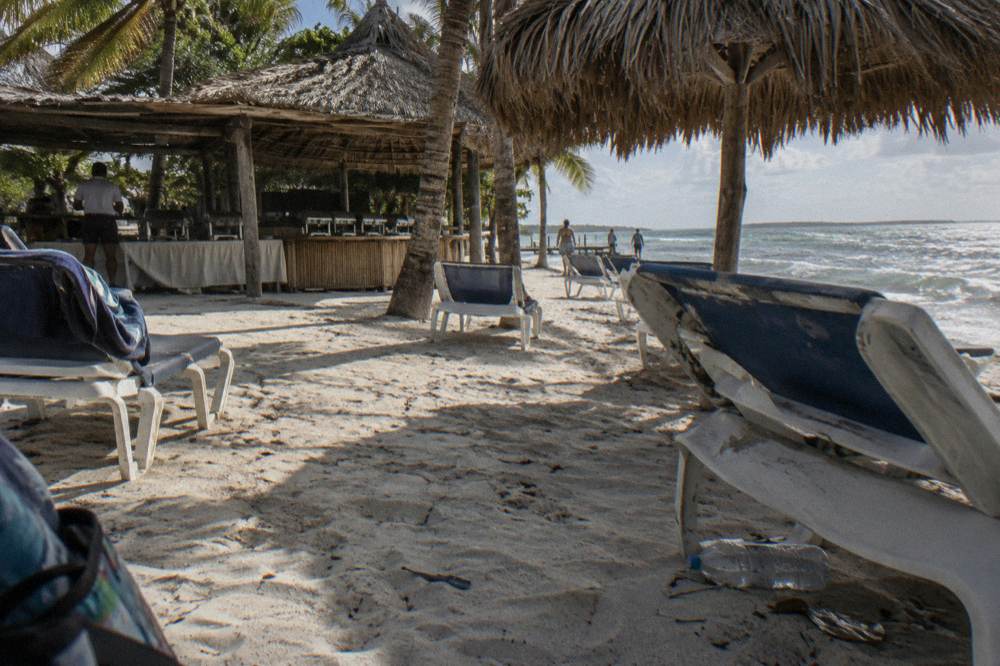
The island block deserves the most scrutiny when you compare listings, because it is where operators differ most. Two hours of genuine beach time after lunch is a solid standard; some large-group itineraries compress it when the schedule slips, and the listing text usually says how the operator handles a late start. Families with young children tend to value a longer island block over a longer sailing leg, since the beach is where the easy hours happen, while couples and groups often prefer the catamaran return for the atmosphere. Knowing which block matters to you turns the duration field from a raw number into an actual decision.
Which Tours From Punta Cana Take The Longest?
The longest days belong to large group catamaran combos and any itinerary stacking a natural pool stop, lunch and a slow sailing leg into one package, commonly 9 to 12 hours door to door. The shortest days are speedboat-out formats from hotels near the highway, which can compress the round trip toward 6 to 8 hours.
Across the roster this site covers, group catamaran day trips price from US$63 to 116 per person and small group and VIP speedboat trips from US$75 to 169, with the median per-person from-price at US$100. Time and price correlate loosely rather than strictly: a small group speedboat trip can cost more than a big catamaran day while saving you two hours, which is the trade a scheduled visitor is often really weighing. The tour types comparison lays that trade out format by format.
Group size interacts with the clock in a second way beyond boat speed. A small group tour loads and unloads faster at the pier, leaves when its own guests are aboard, and tends to hold its schedule through the day. A large group day waits for the last bus, batches wristbands by the dozen and reassembles everyone after each stop, adding five or ten minutes at a time until the schedule has visibly stretched. This is not a criticism of big-group tours, which are usually the cheapest way to see the island, just an honest note that their printed durations run long for a reason.
The all-inclusive Paradise trip from Punta Cana is the format contrast worth naming here: it buys the fuller day with the meal and drinks structure wrapped in, rather than the compressed schedule.
If the clock is the binding constraint, three levers shorten the day. Choose a speedboat-dominant itinerary. Stay in, or transfer to, a southern hotel zone rather than Uvero Alto. And skip formats that build in long beach-club après-boat time, which some listings describe in their itinerary text. Reading the duration field and the pickup window on the operator's live listing side by side tells you more than the title does.
Does The Season Change How Long The Day Takes?
Season affects timing at the margins: December to April usually brings calmer seas and faster crossings, while wet-season days from May to November can add time to catamaran legs or force route changes. Road traffic is heaviest in peak winter weeks, and sargassum or weather can occasionally shift a landing beach, but the door-to-door structure stays the same year round.
The dry season, December to April, is when the timetable behaves. Operators report calmer Caribbean-side water, which keeps the speedboat crossing near the short end of its 20 to 60 minute band and the catamaran leg near the lower part of its 1 to 2 hour range. September and October are the wettest months on long-run averages, roughly 175 and 158 millimeters respectively, against about 40 in the February to March dry trough, and brief intense showers rather than all-day rain are the norm. A passing shower usually costs minutes, not the trip.
Sargassum deserves a neutral word, because it is a common worry and an overstated one on this coast. 2026 has been a heavy sargassum year regionally, but Saona and the Bayahibe area generally see less impact than the east-facing Punta Cana and Bavaro beaches as this coast is often less affected, though it varies by day. It varies by day, and operators sometimes adjust landing spots when it arrives; asking the operator the morning of the trip is the reliable answer, not a calendar promise. If you're still weighing travel dates against the seaweed season, our guide to the worst seaweed months in Punta Cana covers the seasonal patterns on both coasts and how to time a trip around them.
Weather cancellations are rare but real. When operators cancel for rough seas, refunds are typically issued in full, and the free-cancellation flags many listings carry let you rebook rather than lose the day. Checking the forecast the evening before, and confirming the pickup time the night prior, is the whole of the practical weather drill.
Squeezing Saona Into A Short Punta Cana Stay
For a short stay, pick a speedboat-dominant tour from a southern hotel zone, expect the pickup near 7:00 AM and return near 3:30 to 4:00 PM, and treat the evening as recoverable rather than booked solid. Cruise passengers and same-evening flyers should instead consider that any Saona day commits the full daylight window, with no short-format exception on the roster.
The honest arithmetic: even the fastest format costs about seven hours once pickup, transfer, crossing, island time and the return are counted. What the compressed formats protect is the margin at the edges, a late-afternoon return rather than an early-evening one. Travelers with one free day and nothing else scheduled can take any format; travelers sandwiching Saona between a flight and a wedding should take the fast boat and start early.
The featured day trip on this page, the Saona Island Day Trip from Punta Cana, is the classic full-day reference point: hotel pickup listed, the standard beach, lunch and drinks structure, and a duration on the live booking page. For the wider field, the Punta Cana excursions guide compares Saona against the other big days out from the hotel zones, several of which run shorter.
One last scheduling note that is easy to miss: the Dominican E-Ticket, the online entry and exit form at eticket.migracion.gob.do, is a pre-arrival requirement for air passengers, not a tour-day item, but visitors connecting a flight to a same-day or next-morning Saona booking should complete it before landing. Park rules also apply to the clock in one small way: Saona is day-use only, with no overnight stays permitted without a Ministry booking, so no operator can offer a "stay until sunset" extension. The Ministry of Environment's park visit service page, ambiente.gob.do, describes the wristband payment system and the day-use framework, though it publishes no fee amounts; independent guides put the entry fee at roughly US$10 to 12 per foreign adult, and many tours bundle it.
Common Questions About Travel Time To Saona Island From Punta Cana
How Long Is It To Saona Island From Punta Cana?
About six to twelve hours door to door, with eight to eleven hours the most common band. The drive to the Bayahibe pier takes about an hour each way, and the crossing usually runs 20 to 60 minutes by speedboat or 1 to 2 hours by catamaran.
How Long Is The Drive From Punta Cana To The Boat?
Route-computed estimates put the airport to Bayahibe pier drive at about 58 minutes and the Bavaro hotel zone at about 59 minutes in free-flowing traffic. Operators quote 60 to 90 minutes from Bavaro once hotel pickup loops are included.
What Time Do Saona Tours Pick Up From Punta Cana Hotels?
Pickups usually begin between 6:30 and 8:00 AM, depending on the hotel zone. Southern zones like Cap Cana board earliest, while Uvero Alto and Macao add the most minutes to the collection loop.
Is The Speedboat Or The Catamaran Faster To Saona?
The speedboat is faster: usually 20 to 60 minutes against 1 to 2 hours by catamaran, depending on sea and operator. Many tours run speedboat out and catamaran back, so the two legs of the same trip can differ sharply.
Can You Do Saona Island In Half A Day From Punta Cana?
Not really. Even the fastest formats on the roster run about six to seven hours once pickup, the road transfer, the crossing, island time and the return are counted. Compressed speedboat tours protect the afternoon, not the morning.
Does The Park Entry Fee Add Time To The Day?
Very little. Entry is handled by wristband at boarding on most organized tours, and many listings bundle the fee, which independent guides put at roughly US$10 to 12 per foreign adult. Confirm with your operator whether it is included to avoid paying twice.