What To Bring And Wear To Saona Island
A Saona day trip is a long, water-heavy day built around a boat ride, a natural pool swim and a buffet beach, and what you carry decides how comfortable it is. Here is what to pack, what to wear and what the park rules say you must leave behind.
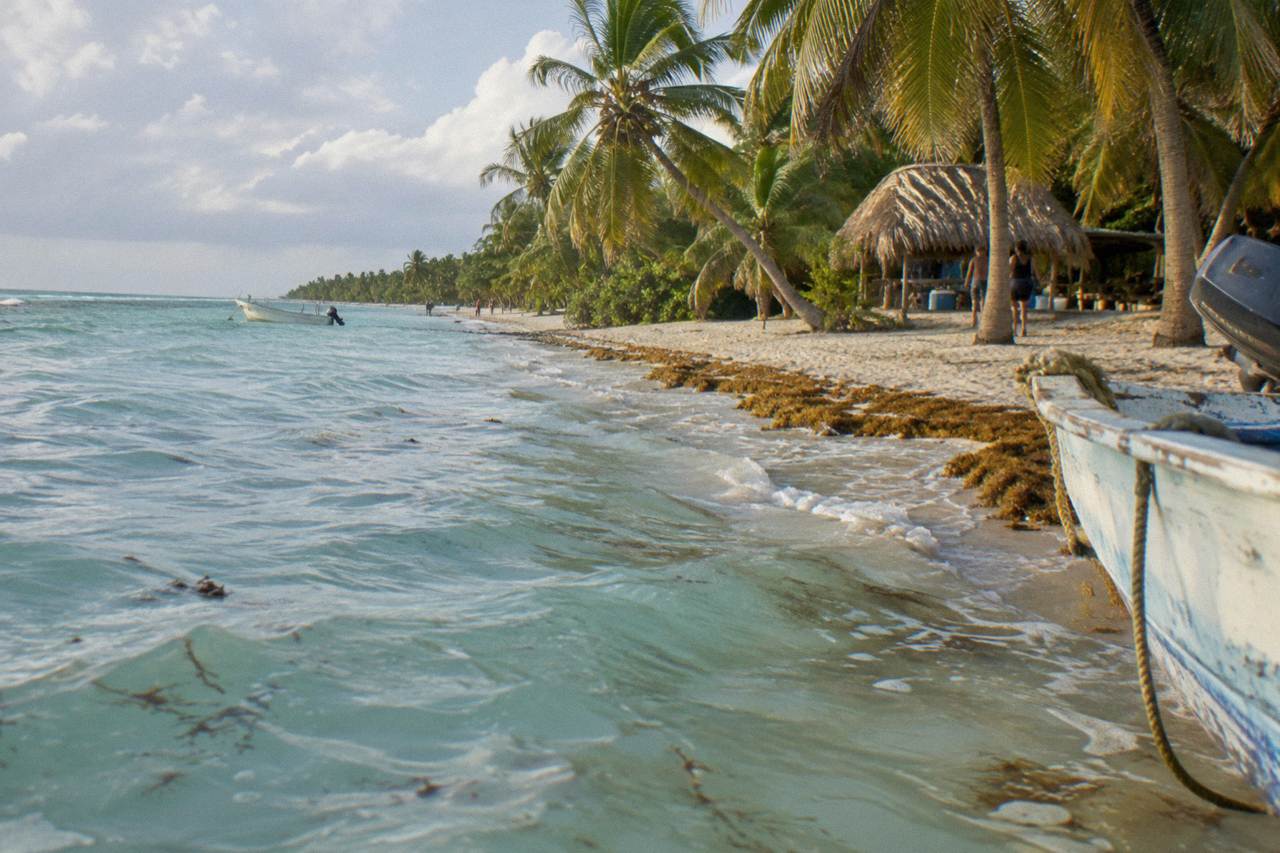
Short answer
Pack light: swimwear under quick-dry clothes, reef-safe sunscreen, a hat, water shoes, a dry bag, cash for extras and tips, and your passport or ID. Leave single-use plastic and foam at the hotel, they are banned in Parque Nacional Cotubanama. Most tours from Punta Cana run about 7 to 11 hours door to door, so pack for a full day.
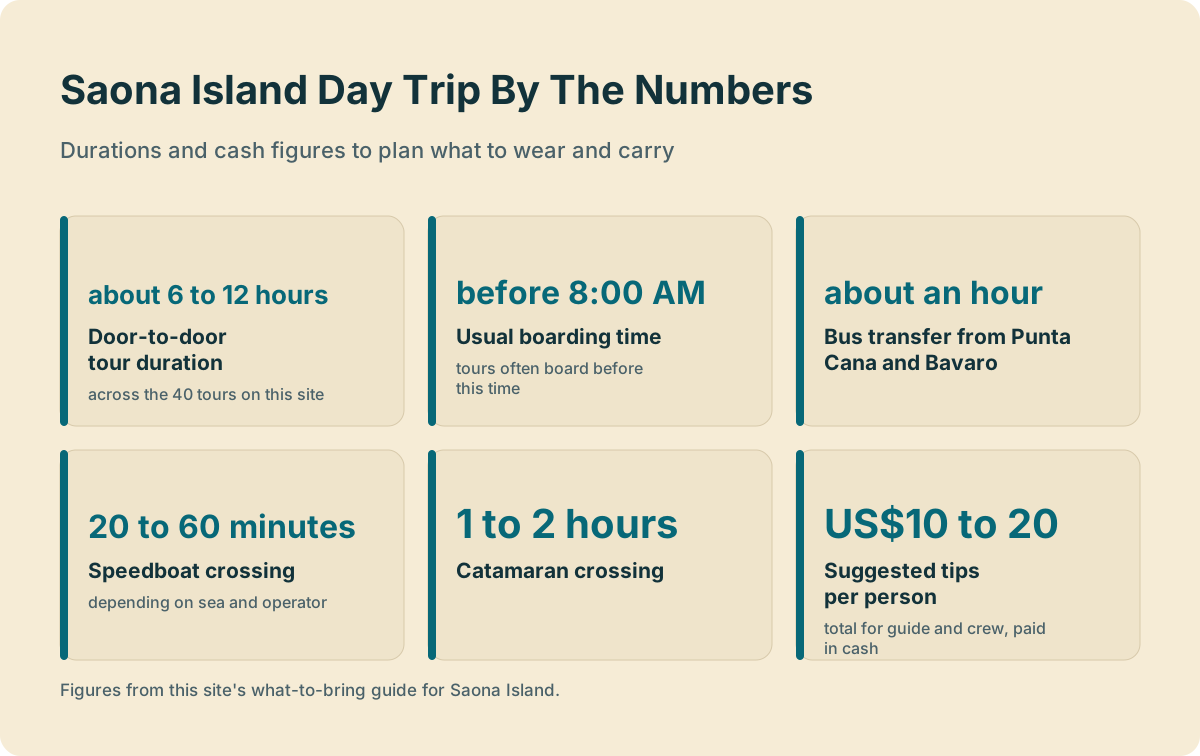
Every Saona Island excursion is a full-day logistics exercise: a road transfer from the hotel zones to the Bayahibe pier, a boat out, a swim in the natural pool, a beach stop with a buffet lunch, and a boat back. Door-to-door durations for the 40 Saona Island tours run from about 6 to 12 hours. What you wear and what you carry is the difference between an easy day and a soggy, sunburned one, and a handful of items are decided for you by the rules of Parque Nacional Cotubanama, the protected national park the island sits inside. This guide works through the whole kit, section by section, using park rules, operator descriptions and each tour's listed inclusions, and it flags the details that vary by listing so you know what to confirm before you go. Readers planning the day from scratch may also want the broader Saona Island complete guide for the full picture.
What Should You Pack For A Saona Island Day Trip?
Pack one small bag per person with swimwear already on under quick-dry clothes, reef-safe sunscreen, a hat and sunglasses, water shoes, a towel, a dry bag or zip bag for electronics, personal medication, and cash in small bills, and leave everything else at the hotel. Storage on the boats is minimal, most operators keep luggage off the vessel entirely, and the day moves from bus to dock to sand without a secure locker stop. Pickup windows usually start between 6:30 and 8:00 AM depending on your hotel zone, so the bag should be packed the night before, not assembled at dawn.
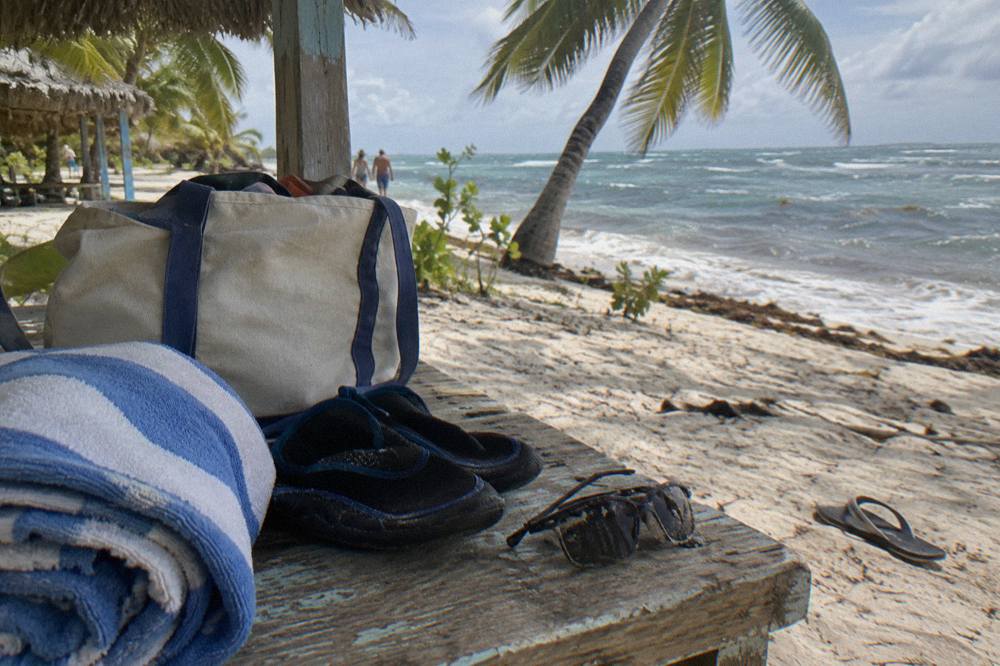
The single most useful item is a dry bag, and it earns its space twice: once on the speedboat or catamaran, where spray is normal on the crossing, and once on the beach, where afternoon showers in the wet season can arrive fast. A phone, documents and spare cash inside a sealed dry bag survive all of it. A cheap zip-top bag is better than nothing, but a proper roll-top dry bag handles being dunked.
The second most useful decision is what not to bring. There is no secure storage worth trusting at the pier or the beach, and nothing on a Saona itinerary needs a laptop, expensive jewelry or more than one change of clothes. Operators describe the day as bus, boat, beach, buffet, boat, bus. Anything you cannot afford to lose or get wet should either stay at the hotel or ride in the dry bag.
Here is the core list, sorted by why each item earns a spot.
| Item | Why It Matters On This Trip | Notes |
|---|---|---|
| Swimwear worn under clothes | No private changing rooms are described at most stops; saves beach time | Quick-dry fabrics dry fastest |
| Reef-safe sunscreen | Recommended for the reef and marine life, not a documented park rule | Apply before boarding, reapply after the natural pool |
| Hat and sunglasses | Full sun exposure on boat and beach for hours | A strap for the hat helps on the speedboat |
| Water shoes | Rocky, shelly patches at some landing spots and in the water | Flip-flops fall off on boat ladders |
| Towel | Some tours provide none; listings rarely mention towels | Microfiber packs small and dries fast |
| Dry bag | Spray on the crossing, rain in the wet season, sand everywhere | Roll-top styles seal best |
| Cash in small bills | Tips, souvenirs, beach vendor snacks, extras | Tips are not included in tour prices |
| Medication and ID | Long day away from the hotel; ID may be checked | Passport photo or card, per your operator's advice |
A good companion piece for the money side of the day is the guide to Saona Island tour price and what is included, which breaks down which of the 40 roster tours bundle the park entry and which stay silent on it.
What Sunscreen And Beach Gear Are Allowed In Parque Nacional Cotubanama?
Reef-safe sunscreen is the expected standard for Saona Island, and single-use plastic and foam products such as polystyrene coolers and cups are formally banned inside Parque Nacional Cotubanama under a 2023 Ministry of Environment resolution, so leave plastic water bottles, foam containers and disposable bags behind. The ban is written into park rules, not operator preference, and it was signed at Mano Juan, the village inside the park, with follow-up community meetings at Bayahibe. Crews on the boats repeat the plastic rule on most departures.
The marine life rules matter just as much for what you carry. Do not remove starfish, shells, coral or sand; the rule is cited by the Ministry and repeated by operators, and it is enforced most visibly at the natural pool, the shallow sandbar stop where starfish congregate. That means no nets, no collection bags, no souvenir shells in the day pack. A cheap underwater camera or a phone in a waterproof case is the right way to take the natural pool home with you; the starfish stay in the water. The guide to the Saona Island natural pool and starfish covers that stop in detail.
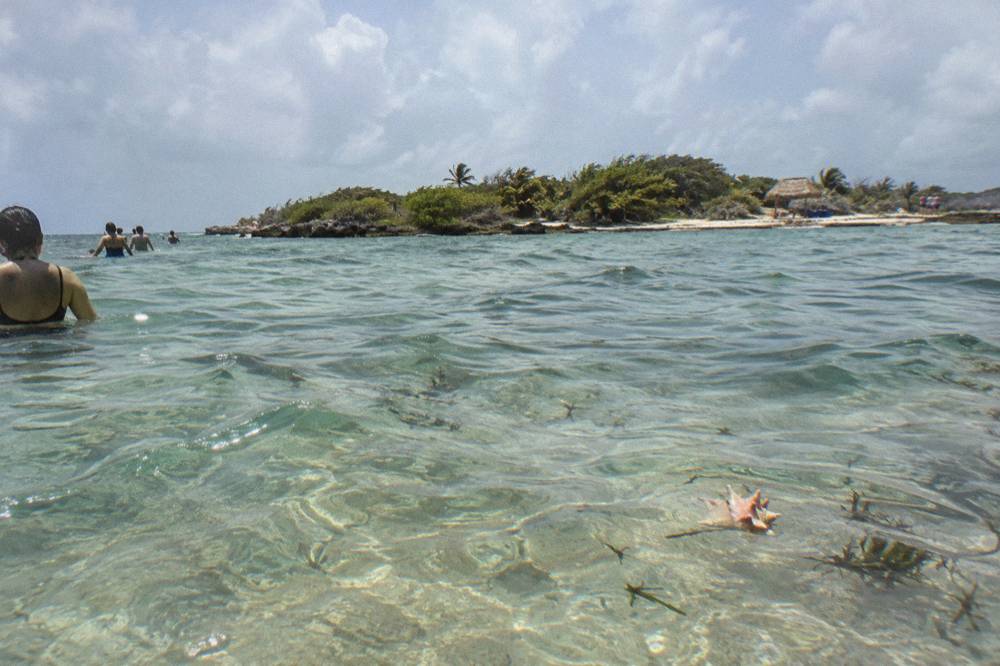
On the gear side, keep it minimal and soft. A foldable beach mat beats a rigid chair, an inflatable floats better in a bag than foam noodles do, and snorkel sets, where a tour includes snorkeling, are normally provided by the operator rather than carried. Check your listing: inclusion flags differ tour by tour, and the roster shows meals, drinks and equipment vary considerably across the 40 options.
The Ministry's own protected-area visit page explains the wristband payment system and the day-visit rules, and it is the official reference for the plastic and foam restrictions: Ministry of Environment protected area visitation service.
For beach gear, this is the short version of what works and what does not.
| Gear Item | Park-Friendly? | Practical Notes |
|---|---|---|
| Reef-safe sunscreen stick or lotion | Yes | Reapply after swimming; avoid oxybenzone products |
| Dry bag | Yes | The workhorse item of the day |
| Foldable mat or thin towel | Yes | Packs flat; sand shakes out |
| Inflatable float | Yes, if it packs flat | Inflate on the beach, not the boat |
| Single-use plastic bottle | No | Banned in the park; tours supply drinks |
| Foam cooler or foam cups | No | Polystyrene banned under the 2023 resolution |
| Snorkel set | Yes, but usually unnecessary | Many tours provide equipment; check the listing |
| Bag for collecting shells | No | Removing shells, coral and sand is prohibited |
What Shoes And Clothing Work Best For The Boat And The Beach?
Wear swimwear under quick-dry shorts and a loose shirt, with water shoes or secure sandals as footwear, and bring one light layer for the boat ride back, when wet clothes and wind combine to chill you even in the tropics. The footwear question is the one travelers get wrong most often. Flip-flops are fine on sand and terrible on a wet boat ladder, and the day involves both within an hour. Water shoes handle rocky and shelly patches in the shallows, grip on deck, and the sand at every stop.
The clothing logic follows the day's structure. You board in the morning, often before 8:00 AM, sit in a transfer bus for about an hour from the Punta Cana and Bavaro zones, then spend the middle of the day in and out of water. Cotton that stays wet becomes uncomfortable by the third hour; quick-dry fabric stays wearable from the natural pool stop straight through the buffet lunch. A light long-sleeve shirt or a cover-up also doubles as sun protection for the crossing, where shade on a speedboat is essentially nonexistent and on a catamaran is partial at best.
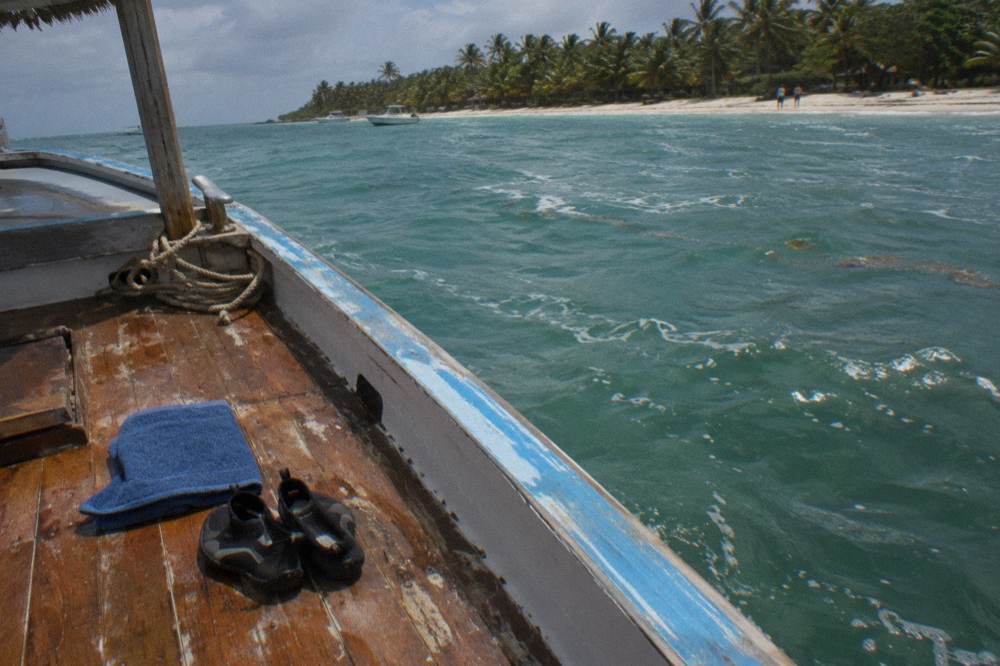
For the boat back, the layer matters more than people expect. Boats usually take 20 to 60 minutes by speedboat or 1 to 2 hours by catamaran to cross, depending on sea and operator, and you will likely be damp, in wind, as the afternoon fades. A dry shirt in the dry bag is a small luxury that pays for itself. The blog post on how long the boat ride to Saona Island is explains the crossing times and why they vary.
One clothing note for families: the same rules scale down for kids, and the guide to Saona Island with kids adds the child-specific packing items, from spare suits to motion-sickness planning, that a general list skims past.
How Much Cash Should You Bring To Saona Island?
Bring cash in small US bills or Dominican pesos for tips, souvenirs, beach vendor snacks and small extras; tour prices do not include tips, a common suggestion for a full-day tour is roughly US$10 to 20 per person total for guide and crew, and extras like photos or premium drinks cost a few dollars paid on the day. No reliable card infrastructure exists at the beach stops, and the buffet lunch and open bar, where your listing includes them, are already paid for in the tour price. Cash covers everything beyond that.
The park entry fee deserves one careful paragraph because it is where travelers double-pay. The fee runs roughly US$10 to 12 per foreign adult according to independent visitor guides; the Ministry publishes no price list, payment is made by wristband at the site, and many tours bundle the entry into the ticket. Of the 40 tours on this roster, 11 explicitly list park entry as included and the other 29 say nothing, so read your listing's inclusions before departure and confirm with the operator if it is unclear. If entry is bundled, you do not need cash for it at all.
The all-inclusive Punta Cana day trip, one of the most fully specified listings on the roster, spells out its inclusions clearly on the operator's live listing, which is exactly the detail worth checking when you are deciding how much cash to carry: Check availability. The full breakdown of tour pricing lives on the tour page and in the cost deep-dive on how much it costs to go to Saona Island.
| Cash Use | Typical Amount | Included In Tour Price? |
|---|---|---|
| Guide and crew tip | Roughly US$10 to 20 per person total for the day | No, tips are separate |
| Park entry, if not bundled | Roughly US$10 to 12 per foreign adult | Included in 11 of 40 roster tours; silent in the rest |
| Souvenirs at Mano Juan or the beach | A few dollars upward | No |
| Beach vendor snacks and drinks | A few dollars, cash only | No, where a tour includes a bar |
| Photo packages | Extras cost a few dollars, pay on the day | No |
What Electronics And Documents Should You Carry?
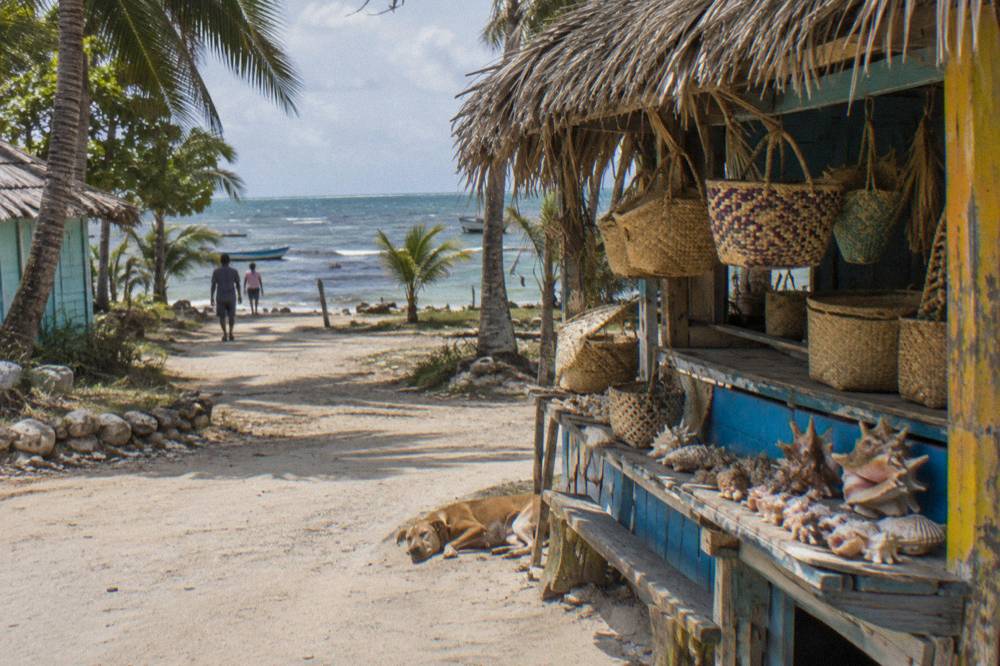
Carry a phone in a waterproof case or dry bag, a power bank if you plan to photograph all day, and your passport or a photo of it plus any booking confirmation; leave everything else electronic at the hotel because nothing on the itinerary needs it and storage on the boats is exposed to spray and sand. The phone is the camera, the ticket and the translator for most travelers, and it is the one device worth protecting properly. A lanyard waterproof case keeps it shootable at the natural pool without risking a drop overboard.
Documents are simpler than people fear. Dominican authorities and tour operators typically want to see ID matching the booking, and your booking confirmation, on paper or on the phone, speeds up the pier check-in. For entry to the country itself, most nationalities including US, Canadian, UK and EU citizens need no visa for stays up to 30 days, and the free E-Ticket form is completed online before arrival at the official portal: Dominican Republic E-Ticket entry form. That is an arrival concern rather than a day-trip concern, but it is the document question that most often surfaces during trip prep.
Power banks matter more than expected because a 7 to 11 hour day with the screen on, in and out of a waterproof case, drains batteries faster than a normal day. A small power bank in the dry bag means the phone is alive for the return transfer and the pickup logistics at the end. The full index of guides sits on Saona Island Dominican Republic Tours.
A quick reference for the pocket electronics:
| Item | Bring Or Leave | Reason |
|---|---|---|
| Phone in waterproof case | Bring | Camera, ticket, contact with the operator |
| Power bank and cable | Bring | Long day, heavy battery use |
| Booking confirmation | Bring | Speeds up pier check-in |
| Passport or ID | Bring | May be checked against the booking |
| Drone | Leave | Park rules and operator restrictions make this a problem |
| Laptop or tablet | Leave | No use, high risk of damage |
| Expensive jewelry or watches | Leave | Beach and boat, all day |
How Does The Season Change What You Pack?
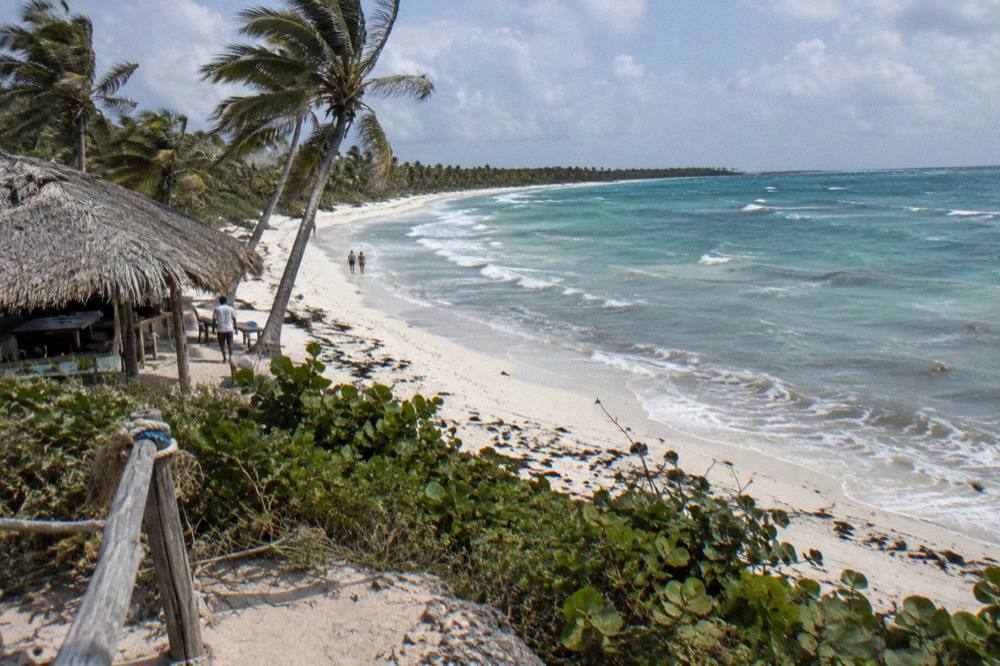
In the dry season, December through April, pack for intense sun and calmer seas; in the wet season, May through November, add a light rain shell, expect brief heavy showers rather than all-day rain, and know that September and October are the wettest months at about 175 and 158 mm on 30-year averages, while February and March are the driest at about 40 mm. The dry season is the peak for a reason: stable sunshine, lower humidity and calmer water for the crossing. The wet season is not a write-off, most rain arrives in short intense bursts, but the kit changes.
Sargassum seaweed is the other seasonal variable, and the honest answer is that it varies by day. Saona's south and west beaches are often clearer than the east-coast hotel beaches around Punta Cana though sargassum levels there vary from day to day, but that is a tendency, not a promise, and no source supports a claim that sargassum is ever absent. Ask your operator about current conditions a day or two before departure. The wet-season months also sit inside the Atlantic hurricane season, which runs June 1 to November 30, and operators may cancel or reroute for rough seas, typically with refund terms stated on the listing.
The seasonal packing adjustments are small but real:
| Season | Months | Kit Adjustment |
|---|---|---|
| Dry season | December to April | Full sun kit; more sunscreen, hat and shade clothing |
| Early wet season | May to August | Add a light rain shell; sargassum risk peaks in this window |
| Peak wet | September to October | Rain shell, dry bag priority, flexible expectations on sea state |
| Late wet | November | Shoulder mix; lighter crowds, still pack for showers |
The full month-by-month picture, including the value windows in May, June and November, is in the guide to the best time to visit Saona Island.
The smaller-format experience tours shift the kit slightly, less onboard storage and more time in the water.
What Should Families And Sensitive Travelers Add To The List?
Families should add spare swimwear for kids, motion-sickness remedies for the crossing, reef-safe mineral sunscreen for sensitive skin, and snacks or formula beyond what the buffet provides, while travelers prone to seasickness should take a remedy before boarding, since crossings usually run 20 to 60 minutes by speedboat or 1 to 2 hours by catamaran. The boats are the part of the day with no exit, and a child who gets seasick 20 minutes into a catamaran return has a long hour ahead. Pre-boarding remedies, light food before departure and a spot mid-boat where motion is least, all help.
Sensitive skin and sun reactions deserve a slightly different sun strategy: mineral-based reef-safe sunscreen, a rash guard or swim shirt for the natural pool stop, which typically lasts 30 to 45 minutes in full sun standing in shallow water, and a hat that survives wind. The natural pool stop is the highest continuous sun exposure of the day precisely because it feels cool while you stand in water. Reapply sunscreen after it, not only after the beach.
The family additions in short:
| Traveler | Add To The Kit | Why |
|---|---|---|
| Kids | Spare suit, dry change of clothes | Two water stops, one day |
| Motion-sensitive | Remedy taken before boarding | Crossing is 20 to 60 minutes by speedboat, 1 to 2 hours by catamaran |
| Sensitive skin | Mineral reef-safe sunscreen, rash guard | The natural pool stop means 30 to 45 minutes in direct sun |
| Snorkelers | Own mask if fit matters | Equipment is provided on tours that include it, but fit varies |
| Photographers | Waterproof case, power bank | Spray, sand and a very long day |
What Should You Leave Behind On A Saona Day Trip?
Leave behind single-use plastic and foam items, which are banned in the park, plus drones, valuable jewelry, laptops, hard coolers, large bags and anything that cannot get wet or sandy, because storage is exposed, the day is long, and the park rules are enforced rather than advisory. This is the section that protects the rest of your belongings. Most hotels in Punta Cana, Bavaro and Bayahibe offer in-room safes, and a Saona day is exactly what they are for.
The drone point deserves a specific mention because it trips up content-minded travelers. Saona sits inside a protected national park run by the Ministry of Environment, and commercial and recreational drone use over protected areas is restricted as a matter of park policy rather than tour preference. Check with your operator before packing one; the default answer is no. The same protective logic covers the marine rules: no touching or removing starfish, no shells, no coral, no sand. A packing list that respects those rules is simply a short one.
What that leaves is a kit that fits in one small bag, protects you from sun and water, keeps your documents and phone dry, carries enough cash for tips and extras, and breaks no park rules. That is the whole task. Book the tour that matches your format, pack the night before, and enjoy the crossing.
Common Questions About Packing For Saona Island
What Should I Bring To Saona Island?
Swimwear worn under quick-dry clothes, reef-safe sunscreen, a hat, water shoes, a towel, a dry bag for electronics and documents, medication, and cash in small bills for tips and extras. Most tours run 7 to 11 hours door to door, so pack for a full day rather than a beach hour.
Is Reef-Safe Sunscreen Required At Saona Island?
Reef-safe sunscreen is the expected standard for the park's waters. Separately, single-use plastic and foam products are formally banned inside Parque Nacional Cotubanama under a 2023 Ministry of Environment resolution, so leave plastic bottles and foam containers at the hotel.
What Shoes Should I Wear On A Saona Island Tour?
Water shoes or secure sandals. The day mixes wet boat decks, boat ladders and sandy or shelly shallows, and flip-flops are the item most likely to fail. Water shoes handle all three surfaces.
How Much Cash Do I Need On Saona Island?
Tips are not included in tour prices; a common suggestion for a full-day tour is roughly US$10 to 20 per person total for guide and crew, plus a few dollars for souvenirs and extras. If your tour does not bundle park entry, budget roughly US$10 to 12 per foreign adult for the wristband fee.
Can I Bring A Plastic Water Bottle To Saona Island?
No. Single-use plastic is banned inside the national park, and tours that include drinks supply them on board and at lunch. Bring a reusable bottle if you want your own, or use the drinks provided.
Should I Bring A Towel To Saona Island?
Yes. Few listings mention towel service, and a microfiber towel packs small, dries fast and fits the day's bus-boat-beach-booth-bus rhythm. Check your listing's inclusions to confirm what the operator provides.
Before you go, the pick for this guide:
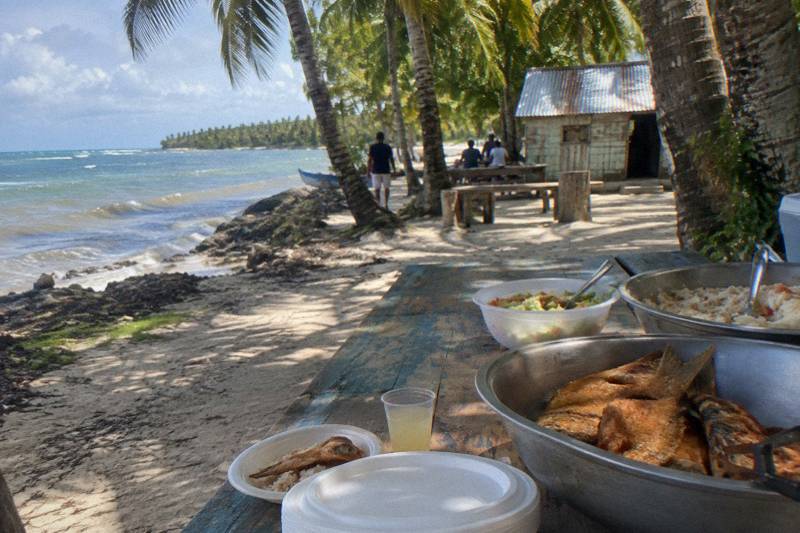
Buffet Lunch Catamaran Day
★ 4.4 · 4,780 reviews · From $71.20
Check availability →