How To Get To Saona Island: Boat, Dock And Transfers
There is one departure point for every Saona Island boat, and knowing it changes how you plan the whole day.
Short answer
Every boat to Saona Island leaves from the Bayahibe and Dominicus pier area on the Dominican Republic's Caribbean coast. Visitors from Punta Cana or Bavaro hotels take a road transfer of about 60 to 90 minutes first, then a speedboat or catamaran crossing of usually 20 to 60 minutes. There is no public ferry.
How Do You Get To Saona Island?
You get to Saona Island by boat from the Bayahibe pier area, roughly 20 to 60 minutes across the water by speedboat or 1 to 2 hours by catamaran, depending on sea and operator. There is no public ferry and no flights. Visitors staying in Punta Cana or Bavaro reach Bayahibe first by road, a drive of about 60 to 90 minutes, and almost everyone arrives as part of an organized day trip. If you're based in Punta Cana and wondering what that day trip actually includes, the Saona Island excursions from Punta Cana guide covers hotel pickup, the transfer, the boat leg, and what the price bundles.
That single sentence answers most of the logistics, but the details matter because they shape your day. Saona sits inside Parque Nacional Cotubanamá, a protected area managed by the Dominican Ministry of Environment, and access runs through authorized boats rather than open public transport. The island lies on the Caribbean side of the country, which is why departures come from Bayahibe rather than from the eastern beaches near the big resorts.
For most travelers the practical route is a tour that bundles everything: hotel pickup, the drive to the pier, the boat, a stop at the natural pool, beach time, and a buffet lunch with drinks. The site's Saona Island Dominican Republic Tours roster exists precisely because the tour is how nearly everyone gets there. Independent travel is possible in a limited way, and this guide covers that too, along with drive times, crossing times, park entry and total cost.
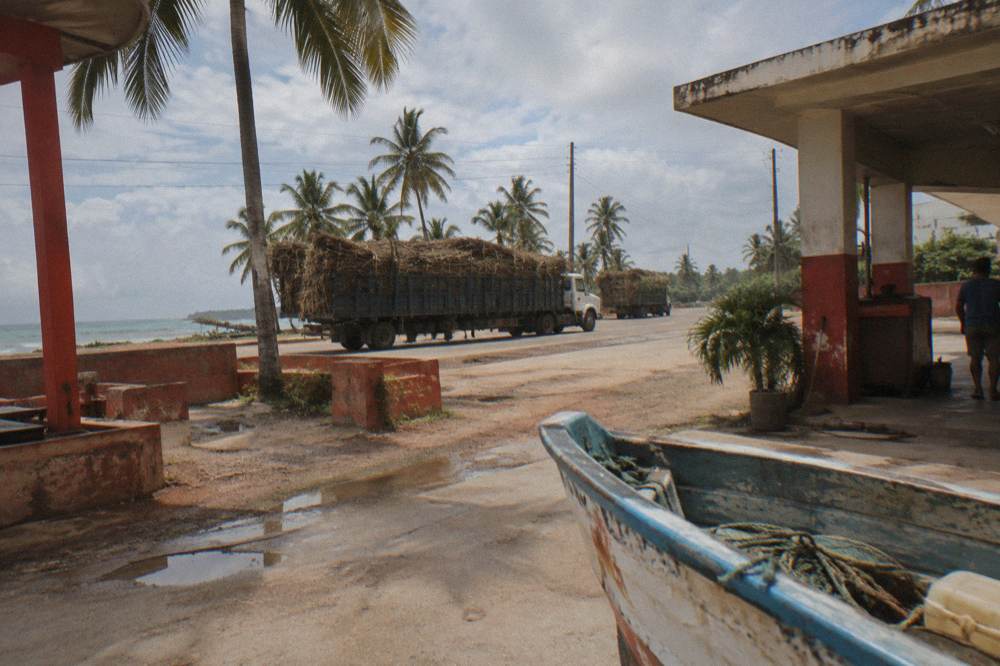
Before the details, one orientation fact worth holding onto: Bayahibe is a small fishing village about 24 kilometers from La Romana, and every one of the roughly forty day trips on this site leaves from its pier area or the nearby Dominicus stretch of coast. If a seller describes a "direct departure from Punta Cana beach," that is not how Saona access works; the road transfer to Bayahibe always comes first. If the mandatory road transfer has you second-guessing the spend, our Punta Cana excursion cost guide walks through what the price actually buys and when the day pays off.
Where Do Boats To Saona Island Leave From?
All Saona Island boats leave from the Bayahibe marina and dock area, including nearby points that serve the Dominicus resort zone, about six minutes down the road. There are no boat departures from Punta Cana or Bavaro beaches. Punta Cana and Bavaro guests are taken by road to Bayahibe first, then board a speedboat, catamaran or a combination of both for the crossing.
Bayahibe is the sole permitted access point, and that is a consequence of geography and park rules rather than commercial preference. The island sits inside a national park on the Caribbean coast, and the Ministry of Environment controls visitation through authorized operators working from this one stretch of shore. Every Saona boat leaves from the Bayahibe and Dominicus pier area. Guests staying in Punta Cana or Bavaro start the day with a road transfer, usually 60 to 90 minutes once hotel pickups are done.
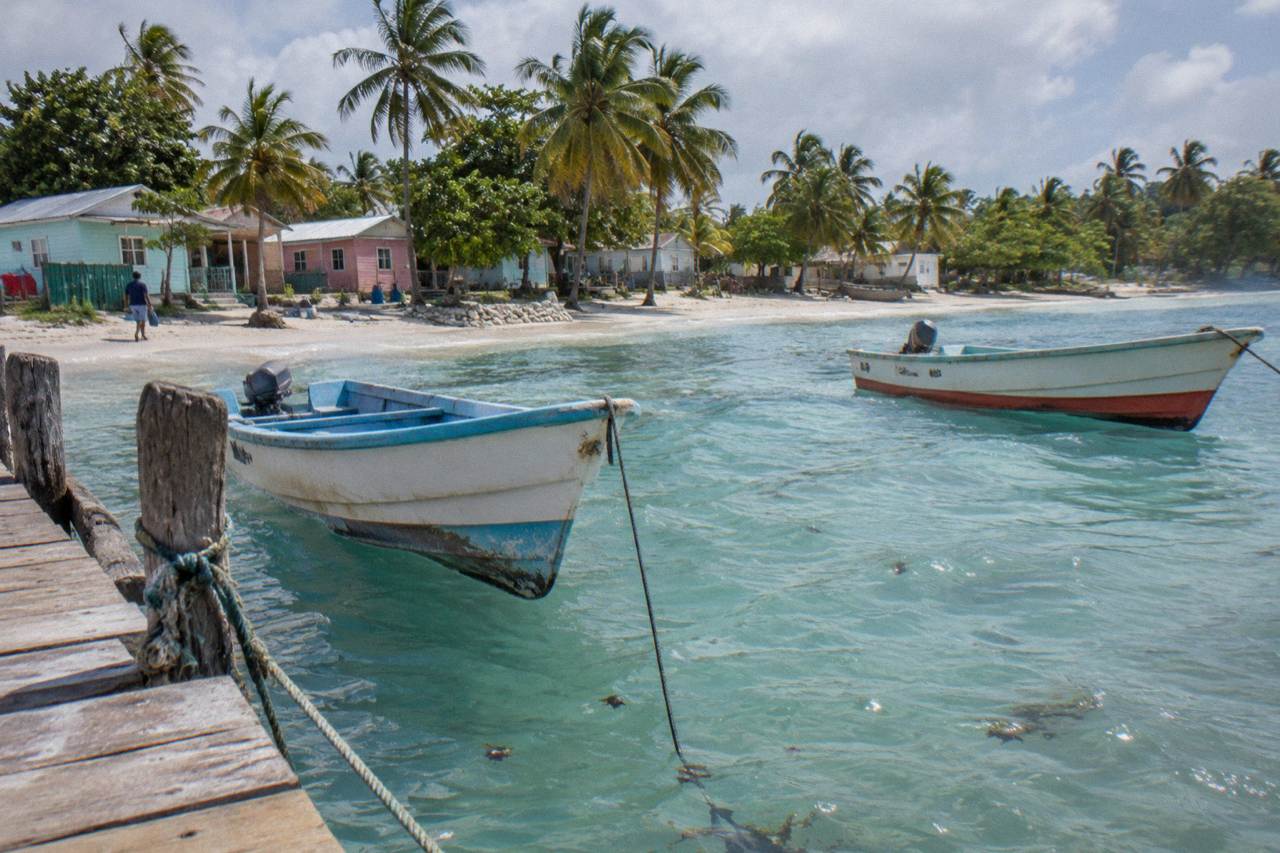
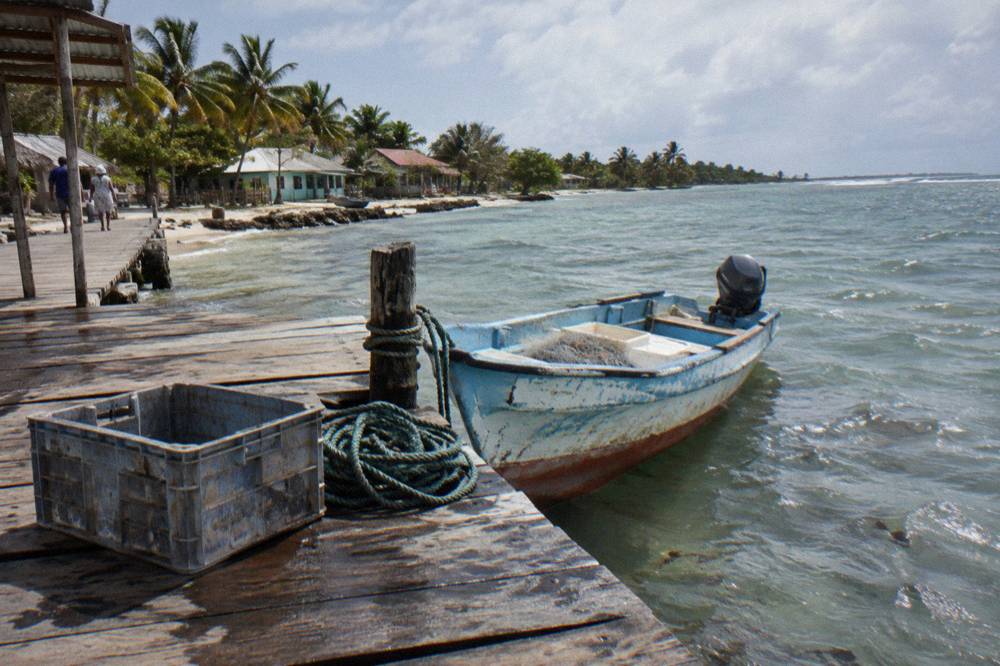
The dock itself is a working fishing village pier, not a purpose-built cruise terminal. In December 2025 a new visitor parking facility opened at Playa Bayahibe, with sidewalks, drainage, signage and a pedestrian bridge, an investment of roughly RD$213 million aimed at reducing congestion around the embarkation points. Arriving travelers will notice the improved flow even if they never think about why the parking is organized.
What you board depends on the product you booked:
| Boat type | Typical use | Character |
|---|---|---|
| Speedboat | Fast crossings, VIP and small-group trips | Usually 20 to 60 minutes to the island, exposed to spray |
| Catamaran | Standard group day trips | Slower, usually 1 to 2 hours, bar and seating on deck |
| Combined | Speedboat out, catamaran back | The most common group format |
Because departure logistics are fixed, the tour you choose is effectively the transport you choose. A shared catamaran day trip from Punta Cana, a small-group speedboat run and a private charter all use the same pier but deliver very different days. The Saona Island tour types compared guide breaks down those formats in detail if you are still deciding which crossing suits you.
Most handle the Bayahibe transfer for you, the part of the day travelers least want to arrange alone, but check each listing for pickup.
Can You Get To Saona Island Without A Tour?
Partly. There is no scheduled public ferry to Saona Island, and there is no scheduled public ferry to Saona, and independent options are informal lanchas. Informal local boats, called lanchas, run from the Bayahibe working dock to the village of Mano Juan when full, and independent guides describe round trips with the fare negotiated on the spot, plus the park fee, with Spanish helpful and return times pre-agreed.
The lancha route exists, but it is worth being clear about what it is not. It is not a ferry with a timetable, it is not an excursion, and it delivers you to a fishing village rather than to the postcard beaches and the natural pool that day trips visit. For a confident, Spanish-speaking traveler with a flexible day it can work. For a family on a one-week resort holiday it usually costs more in hassle than it saves in money.
The park entry fee applies either way. It runs to roughly US$10 to 12 per foreign adult, according to independent visitor guides; the Ministry publishes no price list, so confirm with your operator. Most organized tours bundle it. Of the forty tours listed on this page, eleven spell out park entry as included while the rest stay silent, so read the inclusions before booking rather than assuming.
Park rules apply from the moment you are on the water. Single-use plastic and foam are banned inside Parque Nacional Cotubanamá under a 2023 Ministry resolution signed at Mano Juan itself, and visitors must not remove starfish, shells, coral or sand. The natural pool stop is where guides enforce this most firmly, because the starfish there are the island's most famous residents and touching or moving them is prohibited.
For readers weighing the trade-off, the free and budget things to do around Saona and Bayahibe guide covers what is possible without a paid excursion, and the honest answer is that Saona itself is effectively a paid destination: the boats are commercial, the park fee is a ticket, and the cheapest realistic route to the island is a group tour.
How Long Is The Drive From Punta Cana To Bayahibe?
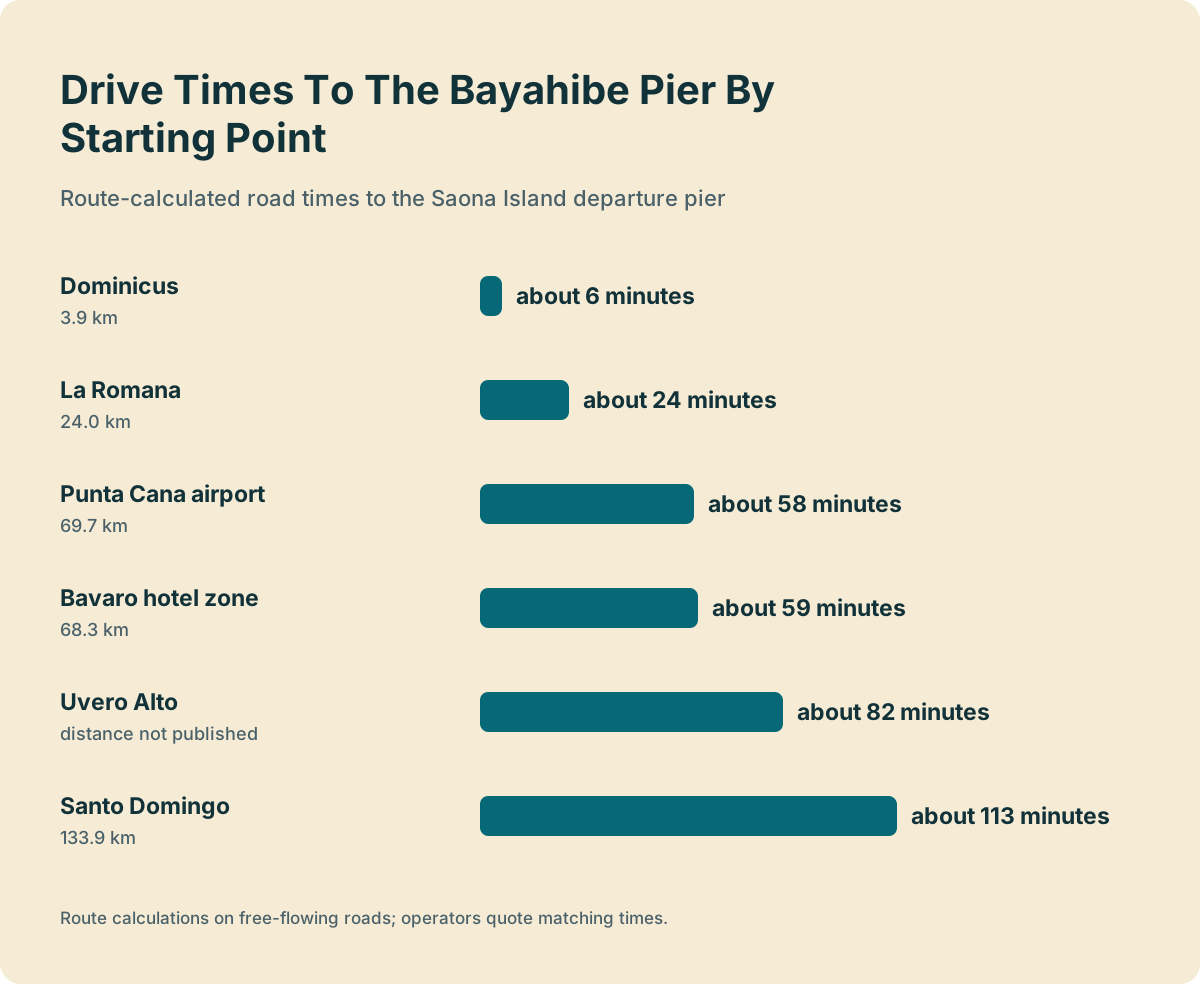
The drive from Punta Cana to the Bayahibe pier takes about 60 to 90 minutes each way, with route-calculated times of roughly 58 minutes from Punta Cana airport, about 69.7 kilometers, and 59 minutes from the Bavaro hotel zone. Pickups usually begin between 6:30 and 8:00 AM depending on hotel zone, so the day starts early.
Those figures come from route calculations on free-flowing roads and match what operators quote. The road is the Autopista del Coral, the modern toll highway that runs down the coast, and it is one of the better stretches of road in the country. Traffic and hotel location move the needle: The drive from Uvero Alto takes about 82 minutes, while Cap Cana and the Punta Cana village end sit closer to the low end of the range.
A few practical consequences follow from the drive. First, a full-day Saona trip from Punta Cana runs long, about 6 to 12 hours door to door across the listings on this site, with most falling between 7 and 11 hours. Second, the early pickup is real: a 7 AM hotel collection is normal in high season, and breakfast arrangements at resort buffets are usually adapted for excursion guests. Third, the drive is dead time unless you make it part of the day, which is why some travelers instead base themselves in Bayahibe, a choice covered in the Bayahibe beaches guide.
| Starting point | Drive to Bayahibe pier | Distance |
|---|---|---|
| Punta Cana airport | about 58 minutes | 69.7 km |
| Bavaro hotel zone | about 59 minutes | 68.3 km |
| Uvero Alto | about 82 minutes | not published |
| La Romana | about 24 minutes | 24.0 km |
| Dominicus | about 6 minutes | 3.9 km |
| Santo Domingo | about 113 minutes | 133.9 km |
The table explains the pricing geography of Saona tours. Departures from La Romana and Bayahibe hotels are shorter because the road leg to the pier shrinks to minutes, while Santo Domingo departures carry the longest transfer, which is why their from-prices sit higher, at US$87.90 to 130 per person across the roster's three Santo Domingo listings.
How Long Does The Boat Ride To Saona Island Take?
The crossing usually runs 20 to 60 minutes by speedboat and 1 to 2 hours by catamaran, depending on sea conditions and the operator's route. These are approximate operator-guide ranges, not timetables, because sea state, the number of stops and the boat's pace all vary. Many mixed itineraries go out fast by speedboat and return slow on the catamaran.
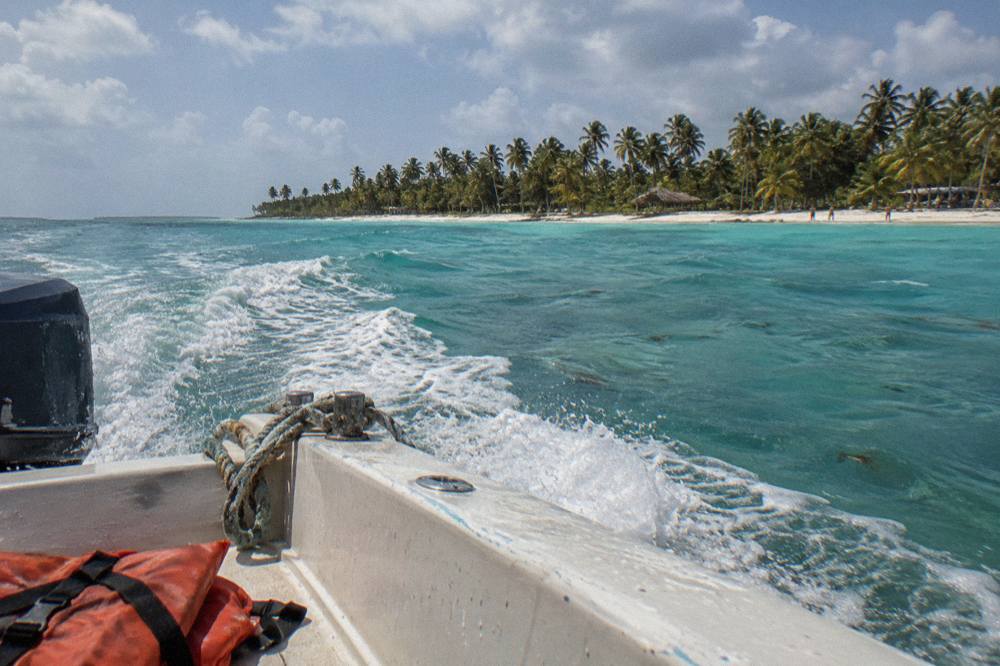
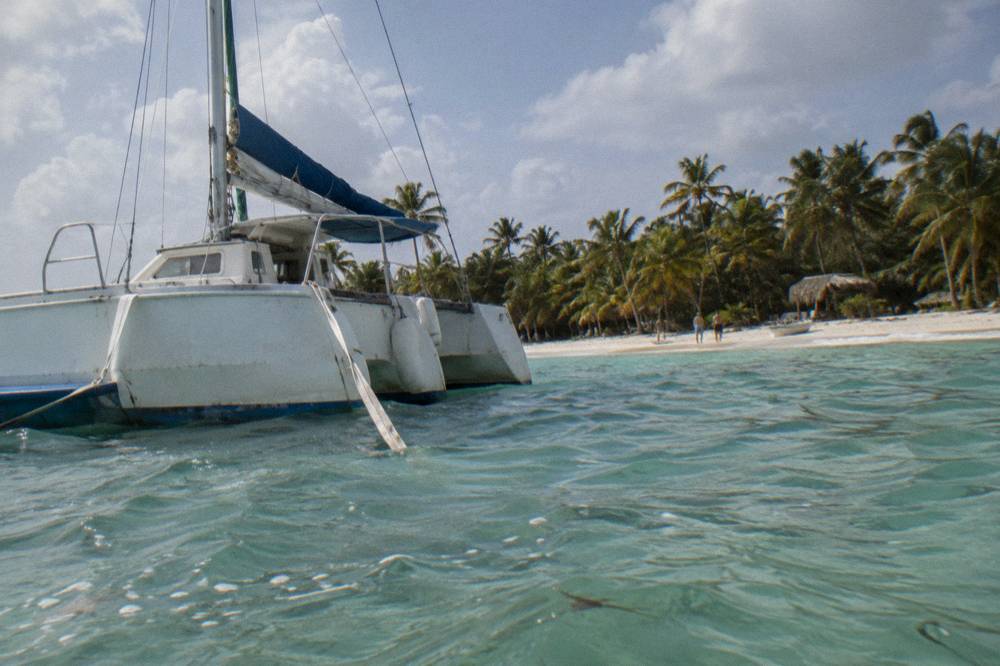
The difference between the two crossings is the difference between two kinds of day. A speedboat crossing is wind in the face, spray and speed, over in less than an hour even on the slower runs. A catamaran crossing turns the transfer into part of the excursion, with deck seating, a bar pumping rum punch and music, and a slow drift across water that shifts between turquoise and deep blue. Neither is better; they suit different travelers.
The boat is also where the itinerary's famous stop happens. The natural pool, the shallow sandbar officially known as Palmilla or the Piscina Natural, sits in the crossing zone, and trips typically spend 30 to 45 minutes there wading in waist-deep water among starfish. Not every tour includes every stop, so the listing matters. The Saona Island natural pool and starfish guide covers that stop in depth.
Sea state is the honest wildcard. Operators report that trips may be altered or canceled for rough seas or weather, with refunds typically available when the operator cancels. The dry season, December to April, tends to bring the calmest water; September and October are the wettest months. If a smooth crossing matters to you, the best time to visit Saona Island guide maps the seasons against crowds and prices.
The all-inclusive format is the one most travelers picture when they imagine the trip: road transfer, boat, natural pool stop, beach time, buffet lunch and open bar, all inside one price from Punta Cana. For a first visit where you simply want the logistics to disappear, it is the format that does that most completely.
What About Arriving From La Romana Or Santo Domingo?
La Romana is the shortest practical base for Saona, about 24 minutes by road to the Bayahibe pier, with Dominicus even closer at about 6 minutes. Santo Domingo is the longest common departure, about 113 minutes each way, and carries the highest from-prices on the roster at US$87.90 to 130 per person across its three listings.
La Romana's position has made it the regional hub for this coast, and 2026 has sharpened that role. The Dominican Port Authority announced in late September 2026 that remodeling and upgrades to the Port of La Romana would begin in October, following an expansion of the cruise terminal, an investment of over US$15 million, that doubled passenger areas and enabled larger ships. From November 16, 2026, MSC Cruises bases the MSC Opera in La Romana year-round, its first year-round Southern Caribbean homeport, a program projected to add roughly 120,000 visitors annually.
For day-trippers none of this changes the pier at Bayahibe, but it does change the texture of the region: more cruise passengers, more excursion demand, and a new premium beach development called Catalina Sugar Beach on neighboring Isla Catalina, opening for the winter season. If you are staying in La Romana or arriving by cruise, booking ahead matters more than it used to. The La Romana things to do guide situates Saona among the area's other options.
Santo Domingo travelers face the longest day. Two hours on the road before the boat even leaves, then the crossing, then the reverse, which is why those listings price higher and why the Saona Island tour from Santo Domingo guide treats the departure as its own decision. For cruise passengers at La Romana, shore-time math is tight enough that a Saona excursion needs to be booked with the port schedule in mind.
The paradise-flagged Punta Cana variant suits travelers who like the sound of the standard route but want the fuller package, and its live listing carries the current duration and inclusions. As with every listing on this site, prices and details live on the operator's page rather than in this guide.
Do You Need A Passport Or Park Ticket To Visit Saona Island?
For most nationalities, including US, Canadian, UK and EU citizens, no visa is needed for stays up to 30 days in the Dominican Republic, and a passport is the standard document for the trip. The park entry fee, roughly US$10 to 12 per foreign adult, is paid by wristband at the site or bundled into the tour, and air arrivals also complete a free online E-Ticket form before travel.
Two different tickets sit behind that answer. The first is national: the Dominican E-Ticket, an online immigration and customs form available at eticket.migracion.gob.do, which air passengers complete before arrival. The US$10 tourist card and the US$20 departure tax are usually bundled into airfares, so most visitors never handle them separately, a point confirmed on the official Dominican Republic tourism entry-requirements page. The second ticket is local: the park wristband. The Ministry of Environment's own visitation service page describes payment by wristband at the site and lists exemptions for schools and institutions, but publishes no amounts, which is why every fee figure in this guide is approximate and sourced from independent visitor guides.
The wristband is where double payment happens if you are not careful. Eleven of the forty listings on this roster explicitly include park entry; the other twenty-nine say nothing. If your listing is silent, ask the operator before departure day whether the fee is bundled, and carry a little cash either way for extras on the island, which cost a few dollars and are paid on the day. The Saona Island tour price and what's included guide dissects the inclusions line by line.
Rules worth repeating on the boat: no single-use plastic or foam in the park, no removing starfish, shells, coral or sand, and day visits only, since overnight stays require a Ministry booking. The Ministry's protected-area visitation page, ambiente.gob.do, covers the wristband process and the overnight email contact for anyone tempted by the rare licensed stay covered in the Saona Island hotels and staying overnight guide.
What Does Getting To Saona Island Cost In Total?
Shared group catamaran day trips from Punta Cana run US$63 to 116 per person as published from-prices, road transfer usually included, with a park fee of about US$10 to 12 often extra. Small-group and VIP speedboat trips run US$75 to 169 per person, and private boats priced per group run US$820 to 1,490. The median per-person from-price works out to US$100.
Those figures are computed from the verified from-prices on this site's own roster, so they describe the real market rather than a marketing range. Where a specific tour's current price sits, the live listing is the authority, because from-prices move with season and demand. What stays stable is the structure of what you are paying for, and it is worth seeing it laid out:
| Cost element | Typical basis | Notes |
|---|---|---|
| Shared group tour | US$63 to 116 per person | Catamaran or mixed format, lunch and drinks usually included |
| Small-group or VIP speedboat | US$75 to 169 per person | Fewer guests, faster crossing |
| Santo Domingo departure | US$87.90 to 130 per person | Longer road transfer priced in |
| Private boat | US$820 to 1,490 per group | Whole-vessel charter |
| Park entry | roughly US$10 to 12 per foreign adult | Bundled in 11 of 40 listings |
| Tips and extras | a few dollars, paid on the day | Cash, not in the tour price |
Two hidden edges cut the total for careful planners. Booking ahead online is generally the safer play in high season, a question this site examines in is it cheaper to book excursions in advance in Punta Cana. And tipping is real but modest: independent guides commonly suggest US$10 to 20 per person for a full day's guide and crew, which belongs in your budget rather than as a surprise at the pier.
What Makes The Journey Smooth On The Day?
The smoothest Saona days come from three habits: confirm your pickup time and pickup point the day before, carry cash in small bills for the park wristband, tips and extras, and pack light with no single-use plastic, since foam and plastic bottles are banned in the park and reef-safe sunscreen is recommended. None of this costs money; all of it saves friction.
Pickup logistics deserve one sentence of care. Pickups usually start between 6:30 and 8:00 AM depending on hotel zone, and the exact time is set by the operator the day before, so a traveler who has not checked messages the evening prior can miss a bus. Hotel lobbies and designated meeting points vary by property, and resort gates in Bavaro can add walking time.
The day itself has a rhythm once you are moving. Road to Bayahibe, boarding at the pier, the crossing with or without the natural pool stop, beach time and buffet lunch on the island, then the return boat and the drive home. Weather can bend any part of it: operators report that rough seas or storms can alter routes or cancel trips, with refunds typically offered when the operator pulls the plug. That is also why the question is it safe to go on an excursion in Punta Cana right now is worth reading before you travel, since it covers operator cancellation norms without the alarm. If you are still choosing who to sail with, the guide to Punta Cana excursion safety explains what separates a solid operator from a shaky one.
The what to bring and wear to Saona Island guide handles the packing list in full. The short version for getting there: dry bag or waterproof phone case, swimwear worn rather than packed, sun protection, cash, and nothing you would mourn if it met Caribbean spray.
Common Questions About Getting To Saona Island
How Do You Get To Saona Island?
Every boat to Saona Island leaves from the Bayahibe pier area on the Caribbean coast. Travelers from Punta Cana or Bavaro take a road transfer of about 60 to 90 minutes to Bayahibe, then a speedboat crossing of usually 20 to 60 minutes or a catamaran crossing of 1 to 2 hours. Nearly everyone arrives on an organized day trip.
Is There A Ferry To Saona Island?
No scheduled public ferry exists. Access runs through authorized tour boats from Bayahibe, plus informal local boats called lanchas that run to Mano Juan village when full, with round trips negotiated on site for roughly $25 to $40 plus the park fee. The lanchas are not equivalent to a full excursion.
How Long Is The Boat Ride To Saona Island?
Usually 20 to 60 minutes by speedboat and 1 to 2 hours by catamaran, depending on sea conditions and the operator. Many mixed itineraries go out by speedboat and return by catamaran, and most include a 30 to 45 minute stop at the natural pool along the way.
How Long Is The Drive From Punta Cana To The Saona Boats?
About 58 to 59 minutes from Punta Cana airport or the Bavaro hotel zone by route calculation, and operators quote 60 to 90 minutes in practice. Pickups usually start between 6:30 and 8:00 AM, and full days run about 6 to 12 hours door to door.
Can You Visit Saona Island Without A Tour?
Only in a limited way. Independent boat access to the national park is not permitted, but informal lanchas from the Bayahibe working dock run to Mano Juan village. Spanish helps, the return time must be pre-agreed, and you still pay the park fee, which runs roughly US$10 to 12 per foreign adult.
Do You Need A Passport For Saona Island?
Your standard Dominican Republic entry documents cover it. Most nationalities need no visa for stays up to 30 days, air passengers complete the free online E-Ticket form before arrival, and the tourist card and departure tax are usually bundled into airfares. On the island itself the relevant ticket is the park wristband, which many tours bundle.