Best Time To Visit Saona Island: Weather And Seas By Month
Saona sits inside a protected national park on the Dominican Republic's Caribbean coast, and almost everything about the day, from the boat ride to the color of the water, bends to the season.
Short answer
December to April is the dry season and the most dependable window for a Saona trip, with about 40 mm of rain in the driest months and calmer seas. May to November is wetter, September the wettest at about 175 mm, and hurricane season runs June 1 to November 30. Prices and crowds peak in the dry months.
Saona Island sits inside Parque Nacional Cotubanama on the Dominican Republic's southeast coast, and the single biggest factor in how the day goes is not which tour you pick but which week you pick it in. The island is reached by boat from Bayahibe, usually 20 to 60 minutes by speedboat or 1 to 2 hours by catamaran depending on sea and operator, so the weather window matters more here than on a beach you can drive to. Rain, wind, sargassum and crowds all move with the calendar. Once you have picked the right stretch of the calendar, our guide to how long the crossing from Bayahibe to Saona really takes explains how your choice of boat and the day's sea state can reshape the whole itinerary.
The dependable answer is short: the dry season, December to April, gives you the best odds. The fuller answer involves trade-offs between price, seaweed, cruise-ship traffic and the Atlantic hurricane season, which runs June 1 to November 30 according to the National Hurricane Center. This guide walks through each of those factors by month so you can pick dates with your eyes open rather than hoping for luck.
When Is The Best Time To Visit Saona Island?
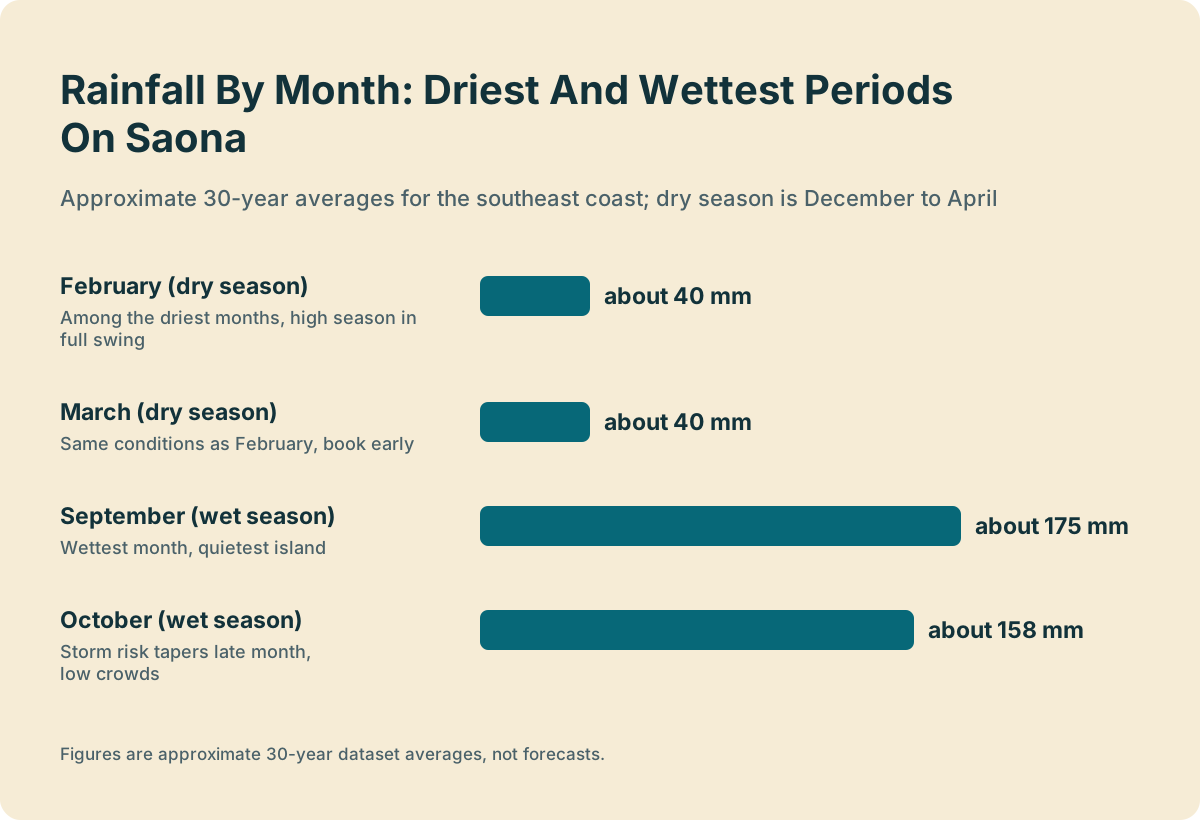
The best time to visit Saona Island is the dry season, December to April, when rainfall averages about 40 mm in the driest months of February and March, humidity is lower and seas are generally calmer for the boat crossing from Bayahibe. May to November is the wet season, September is the wettest month at about 175 mm, and hurricane season runs June 1 to November 30, peaking mid-August to mid-October.
Those rainfall figures are approximate 30-year dataset averages, not forecasts, and they describe the southeast coast broadly rather than Saona's beaches specifically. Even in September, rain on this coast often arrives in brief, intense showers rather than all-day gray, so a wet-season trip is not a write-off. What actually degrades a Saona day more often than rain is wind and chop on the crossing, which is why the calmer dry-season sea state gives those months their edge.
Trade-offs matter too. December to April is peak season, so the island's main beach areas are busier and per-person prices sit at the top of their range. Saona tours run from about US$63 per person for group catamaran day trips up to US$169 for small-group and VIP speedboat options, with a median around US$100, and demand in the dry months pushes availability tight. May, June and November sit in a middle zone many travelers like: fewer crowds, better availability, still-pleasant conditions.
The day itself is long whatever month you choose. Full-day listings across the roster run about 6 to 12 hours door to door, with hotel pickups usually starting between 6:30 and 8:00 AM from Punta Cana and Bavaro zones. That early start is another reason weather stability matters; a choppy morning affects the whole shape of the day.
What Is The Weather Like On Saona Island Month By Month?
Saona's year splits into a dry season from December to April and a wet season from May to November. On roughly 30-year averages, February and March are the driest months at about 40 mm of rain each, while September is the wettest at about 175 mm and October close behind at about 158 mm. Daytime temperatures hold around 27 to 30 degrees year-round, so warmth is never the variable, rain and sea state are.
Those numbers come from a long-run precipitation dataset for the island, published by weather-and-climate.com, and they are averages, not promises. A February cold front can still bring a rainy afternoon, and a September week can be entirely sunny. Use the table as a planning range, not a forecast.
| Month | Season | Approx. average rain | What it means for a Saona day |
|---|---|---|---|
| December | Dry begins | Moderate, falling through the month | Calmer seas return, peak crowds build |
| January | Dry | Low | Reliable sunshine, busy beaches, cooler evenings |
| February | Dry | About 40 mm, among the driest | Excellent odds, high season in full swing |
| March | Dry | About 40 mm, among the driest | Same as February, book early |
| April | Dry ends | Low to moderate | Late-month humidity rises, crowds thin |
| May | Wet begins | Moderate | Shoulder value, sargassum risk near its peak |
| June | Wet | Moderate | Hurricane season opens June 1, still workable |
| July | Wet | Moderate to high | Warm sea, higher rain odds, busy with families |
| August | Wet | High | Peak hurricane-activity window opens mid-month |
| September | Wet | About 175 mm, wettest | Highest rain risk, quietest island |
| October | Wet | About 158 mm | Storm risk tapers late month, low crowds |
| November | Wet ends | Moderate, falling | Underrated shoulder month, seas settling |
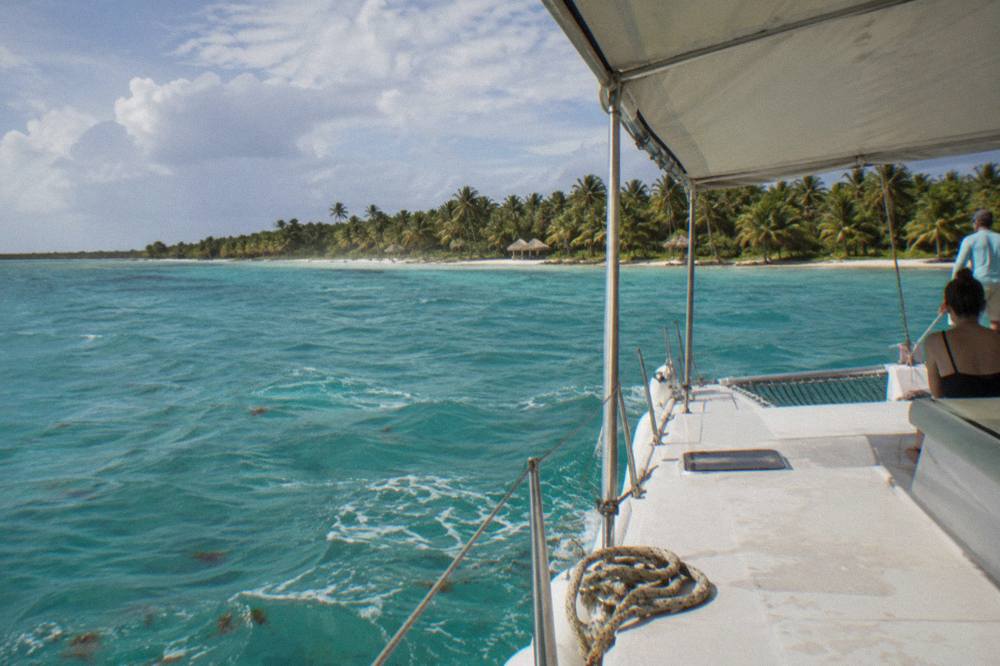
Two practical notes follow from the table. First, the wettest months, September and October, are also the quietest on the water, with the widest choice of open dates, so travelers who can accept a rain gamble get real value. Second, the crossing itself is weather-exposed: operators report that tours may be altered or canceled for rough seas or high winds, and listings commonly allow a refund when the operator cancels. That cuts both ways, a wet-season booking carries a slightly higher chance of reshuffling.
Within any given month, the rhythm of the day rarely changes. Most itineraries run speedboat out, catamaran back, or the reverse, with a 30 to 45 minute stop at the natural pool off Palmilla and beach time plus a buffet lunch at Canto de la Playa, Mano Juan or the main beach. Not every tour includes every stop, so the itinerary, not the calendar, sets the shape of the day. For a fuller picture of how a day like this unfolds, the complete Saona Island tour itinerary from pickup to drop-off walks through each stop in order and what tends to vary by tour.
How Rough Are The Seas On The Crossing To Saona Island?
Seas between Bayahibe and Saona are usually calmest from December to April and more variable from May to November, and no crossing time is fixed: the crossing usually takes 20 to 60 minutes by speedboat and 1 to 2 hours by catamaran, depending on sea state and operator. Wind and chop, more than rain, are what operators cite when they alter or cancel a departure.
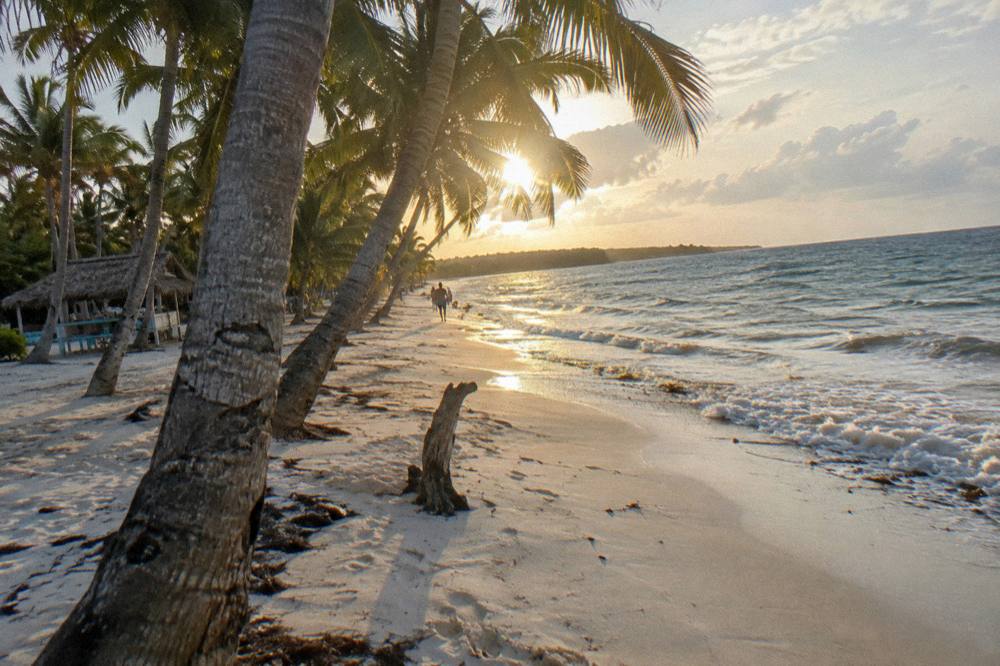
The geography helps. Saona sits on the Caribbean side of the Dominican Republic, protected from the open Atlantic swell that pounds the east-facing Punta Cana and Bavaro beaches. That is the same geography that often shields Saona's south and west beaches from the worst sargassum landings. It does not make the crossing flat, but it means the ride is typically shorter and gentler than an exposed Atlantic crossing of the same distance.
| Factor | Calmer odds | Rougher odds | Notes |
|---|---|---|---|
| Season | Dec to Apr | May to Nov | Dry season generally brings steadier conditions |
| Vessel | Catamaran | Speedboat | Catamarans roll less; speedboats pound in chop |
| Direction | Either | Either | Out and back on the same water, no sheltered leg |
| Time of day | Varies | Varies | No published pattern; mornings are not guaranteed calmer |
If you are prone to seasickness, two decisions matter more than the month. Choose a catamaran over a speedboat when the option exists, and take motion medication before boarding rather than after the first bump. Wet-season travelers should also check the forecast the night before and read their listing's cancellation terms, since operator-canceled departures are typically refunded but passenger no-shows are not.
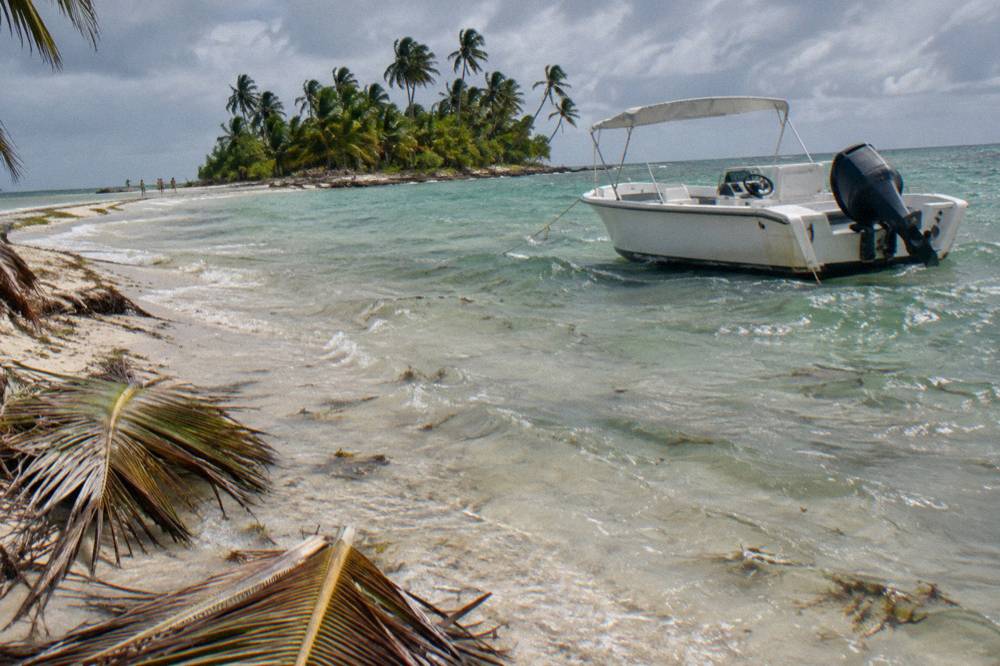
The vessel choice also sets the pace of the day. Catamaran-based itineraries, like the all-inclusive Saona Island day trip from Punta Cana, trade speed for a slower, drink-in-hand crossing, which suits families and anyone treating the boat as part of the outing. Speedboat-based VIP options compress the crossing and spend the saved time on the island or the natural pool.
When Is Sargassum Seaweed A Problem Around Saona Island?
Sargassum risk around Saona is highest from roughly May to August and lower from November through the dry season, but no month is guaranteed clear, and it varies by day and by beach. Saona's south and west shores are often cleaner than the east coast around Punta Cana because the island deflects drifting mats westward, yet operators still adjust landing spots when weed arrives, so ask before you book. For a fuller month by month picture of the algae season, our guide to Punta Cana's worst seaweed months explains why Bayahibe and Saona often stay clearer than the east coast.
Regional monitoring in 2026 tracked record or near-record Caribbean sargassum totals through the first half of the year, with outlook bulletins projecting declining abundance and lighter beaching through November and into the winter. That trajectory favors dry-season visitors, but a single wind shift can bring a landing to any beach on any day, which is why the honest answer is always: it varies, ask the operator.
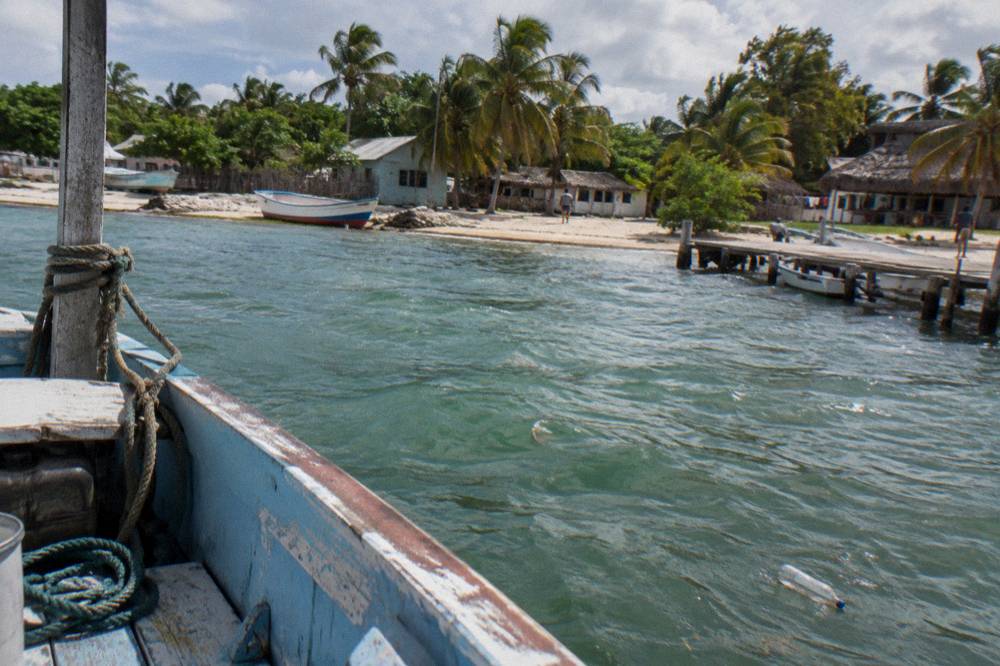
Sargassum matters less on Saona than the panic headlines suggest. The weed floats on the surface and gathers on windward shorelines; the natural pool stop, which sits in shallow water off Palmilla, is often clearer than the beaches. When sargassum is heavy enough to spoil a beach, operators may adjust the landing spot rather than cancel outright, though nothing is guaranteed.
When Is Saona Island Most Crowded?
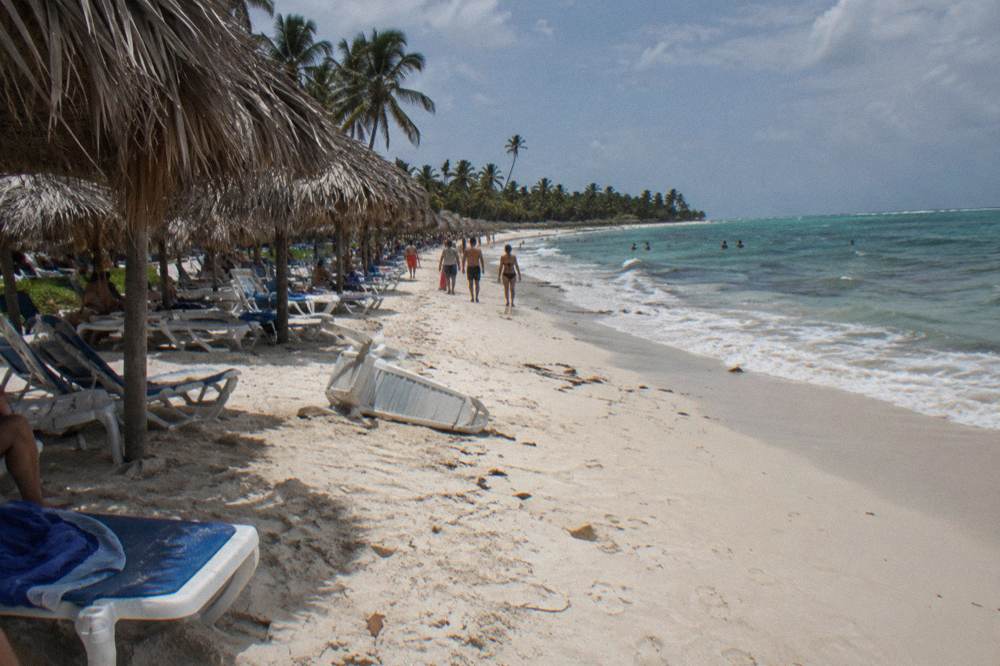
Saona is busiest from December to April, when the dry season, North American winter escape and European holidays stack on top of each other, and calmest in September and October, the wettest months. Cruise traffic adds another layer: La Romana's cruise terminal now handles larger ships year-round, so midweek days can be busy in any season when ships call.
The cruise side of the crowd picture is changing. The La Romana Cruise Terminal was expanded in a project of over US$15 million, doubling passenger areas, and MSC will make La Romana a year-round homeport from November 2026 with weekly sailings projected to add roughly 120,000 visitors annually to the region. Many of those cruise passengers take Saona and Catalina excursions, so the island's baseline busyness has risen even in shoulder months.
| Period | Crowd level | Why | Best counter-move |
|---|---|---|---|
| December to April | Highest | Dry season plus winter holidays | Book two to three weeks ahead, go midweek |
| May to June | Moderate | Shoulder value, sargassum near peak | Small-group tour for space on the beach |
| July to August | Moderate to high | Family travel, warm sea | Early pickup, first boat out |
| September to October | Lowest | Wettest months, low season | Short-notice booking, flexible dates |
| November | Moderate, building | Seas settle, snowbirds return | Quiet before the December rush |
Crowd tolerance is personal, and the fix is mostly a tour-format choice rather than a date choice. A small-group speedboat trip carries fewer passengers and lands you at the beach ahead of the catamaran fleets, while a private charter lets you set the schedule entirely. Our private Saona tour guide breaks down when the premium is worth it.
For travelers who want the standard all-inclusive day at the calmest price point, the shoulder logic is simple: trade a little weather certainty for a quieter island and a better rate. A solid middle path for many is the well-reviewed Saona Island day trip from Punta Cana, which covers the classic speedboat and catamaran loop with lunch and drinks included.
What About Hurricane Season For A Saona Trip?
The Atlantic hurricane season runs June 1 to November 30, with peak activity from mid-August to mid-October, so the highest-risk window for a Saona trip is late August through early October. Direct hits on the southeast coast are historically rare, but storms far away can still bring rain, swell and small-craft warnings that alter or cancel boat departures.
The practical exposure is the boat, not the wind. Saona trips leave from Bayahibe, and Dominican authorities issue small-craft precautions when seas build, which is when operators pause departures. Forecasts for 2026 anticipated slightly below-average activity overall, and activity generally declines through October and into November, making late November one of the better-odds shoulder bets.
Two booking habits protect you in this window. First, choose listings that state free cancellation and hold your date early, so you can shift if a system approaches. Second, arrive a few days before your planned Saona day rather than scheduling it as your departure-day activity, giving slack to rebook. Travel insurance that covers weather disruption is worth it for September and October trips specifically.
One safety note, stated plainly: in late July 2026 a tourist boat returning from a Saona excursion off Bayahibe suffered an explosion and fire, injuring 23 people, with no deaths reported. Travelers with concerns can ask their operator directly before departure. It does not reflect a seasonal pattern, but it is a fair reminder to book with established operators whose listings describe crew, life jackets and safety briefings.
For a deeper look at the safety question beyond weather, our article on whether Punta Cana excursions are safe right now covers the practical picture.
Which Month Should You Actually Book For Saona Island?
For the best all-round odds, book February or March: driest averages, calm seas and long daylight before the heat builds. For value with acceptable risk, book late November or early December, when seas settle, crowds are thin and sargassum outlooks trend clearer. Book September or October only with flexible dates and a refundable listing, accepting the highest rain odds in exchange for the quietest island.
Month choice and tour format interact more than most guides admit. In peak months, a small-group or VIP speedboat trip buys you escape from the biggest beach crowds, and the premium feels worth it. In quiet months, the standard group catamaran day is already uncrowded, so the extra spend buys less. Our guide to Saona tour types compared works through that trade in detail.
Whatever month you pick, remember the park rules are season-free. Saona lies in Parque Nacional Cotubanama, managed by the Ministry of Environment, where single-use plastic and foam are banned and removing starfish, shells, coral or sand is prohibited, rules the Ministry describes on its protected-area visit service page. Entry is paid by wristband at the site, roughly US$10 to 12 per foreign adult according to independent visitor guides, though many tours bundle it, so confirm with your operator to avoid paying twice.
Rain or shine, the day also runs on logistics: hotel pickups usually start between 6:30 and 8:00 AM, the drive from Punta Cana to the Bayahibe pier takes about an hour, and the whole outing spans 6 to 12 hours door to door. Travelers flying in should also complete the Dominican Republic's free E-Ticket entry form online at eticket.migracion.gob.do before arrival. More of those planning details, including what to pack for a long sun day, sit in our what to bring to Saona Island guide, and the broader picture is in the complete Saona Island guide on this site, Saona Island Dominican Republic Tours.
For a slower-paced, less standard format that suits quiet-season flexibility, the Saona Island unique experience listing runs a different shape of day from the big catamaran loops, and it can be held alongside a refundable plan B.
Common Questions About Visiting Saona Island
What Is The Rainy Season On Saona Island?
The wet season runs May to November, with September the wettest month at about 175 mm on roughly 30-year averages and October close behind at about 158 mm. Rain often falls in short, heavy bursts rather than all day, so wet-season trips still frequently work.
Is December To April Really The Best Time To Visit Saona Island?
It offers the best overall odds: the driest months, February and March, average about 40 mm of rain, seas are generally calmer for the Bayahibe crossing, and sargassum risk is at its lowest. The trade-off is peak crowds and peak prices.
Can A Saona Tour Be Canceled For Weather?
Yes. Operators report that departures can be altered or canceled for rough seas, high winds or storms, and listings commonly offer a refund when the operator cancels. Check your listing's cancellation terms before booking in the wet season.
Which Months Have The Most Seaweed Around Saona?
Sargassum risk is highest roughly May to August and generally declines from November onward. Saona's south and west beaches are often clearer than the east coast around Punta Cana, but no month is guaranteed clear, so ask your operator about current conditions.
When Is Saona Island Least Crowded?
September and October, the wettest months, are the quietest. November is an underrated middle ground: seas are settling, sargassum outlooks trend clearer and the December rush has not yet arrived.
Does Hurricane Season Affect Saona Trips?
The Atlantic season runs June 1 to November 30, peaking mid-August to mid-October. Direct impacts on the southeast coast are historically rare, but distant storms can bring swell and small-craft warnings that pause boat departures, so book refundable listings and keep schedule slack.