What Is The Prettiest Beach On Saona Island?
Canto de la Playa leads most shortlists for Saona's prettiest beach, but the answer depends on which beach your tour actually stops at. Here is how the island's beaches compare.
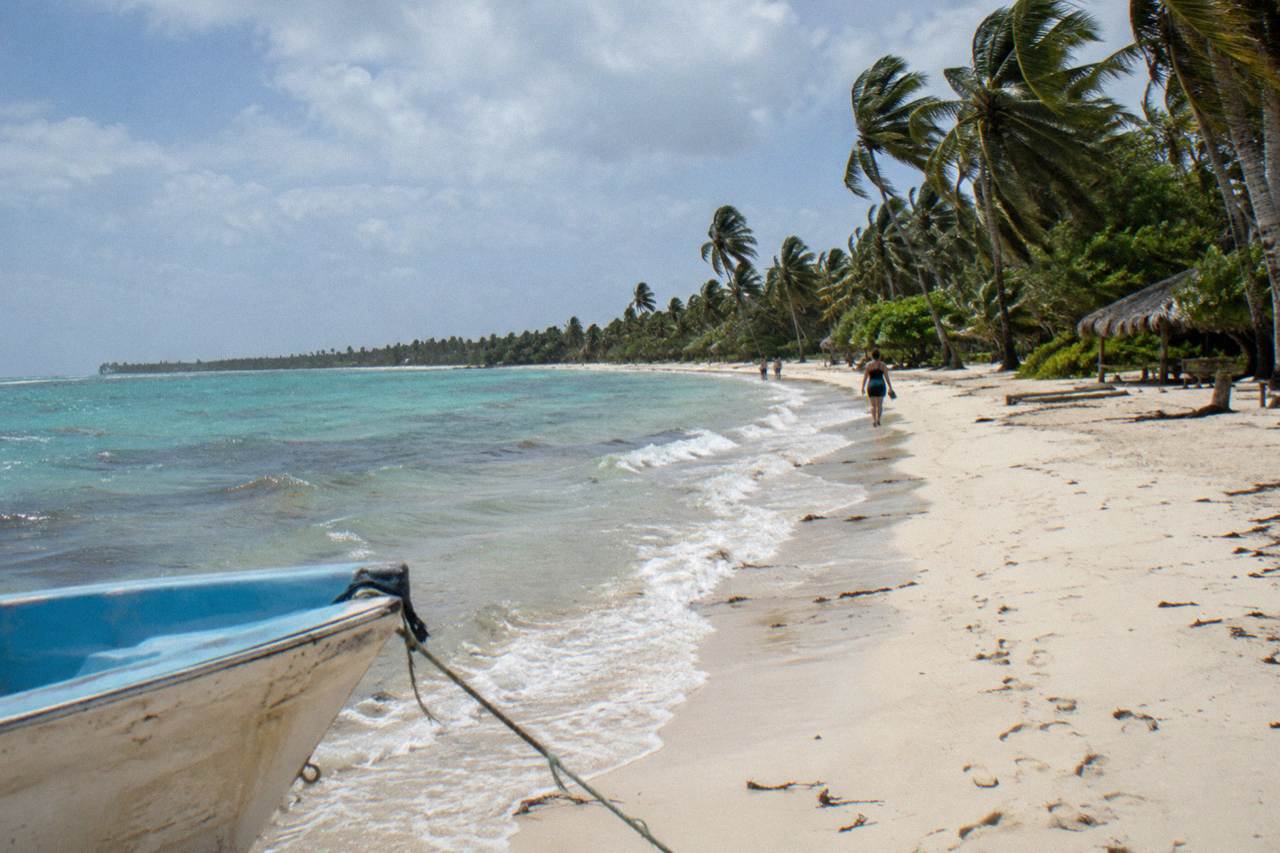
Saona Island sits inside Parque Nacional Cotubanamá, and its shoreline is not one beach but several: a busy main beach where the big catamaran fleets land, the long pale arc of Canto de la Playa on the protected south side, the shallow village strand at Mano Juan, and the sandbar shallows of the Palmilla natural pool just offshore. Which one you stand on depends almost entirely on which tour you book, because the island has no public ferry and every visitor arrives on an operator's boat from the Bayahibe pier. If your tour includes time in the water, the guide to Saona Island snorkeling stops and gear explains what operators hand out and what you should bring yourself.
That is why asking which beach is prettiest on Saona has a practical edge. The prettiest stretch of sand is a matter of taste, but whether you can reach it before lunch is a matter of itinerary. This article walks through the beaches the roster tours actually list, what each one is like, and which listings name which stop, so the beach you pick and the ticket you buy line up.
Canto de la Playa is the beach most often named Saona's prettiest: a long, wide arc of pale sand on the island's sheltered south side, backed by palms and coconut groves, with calm turquoise water and far fewer boats than the main landing beach. It is also the easiest "prettiest beach" answer to act on, because several tours list it by name as a stop, including catamaran and VIP speedboat itineraries.
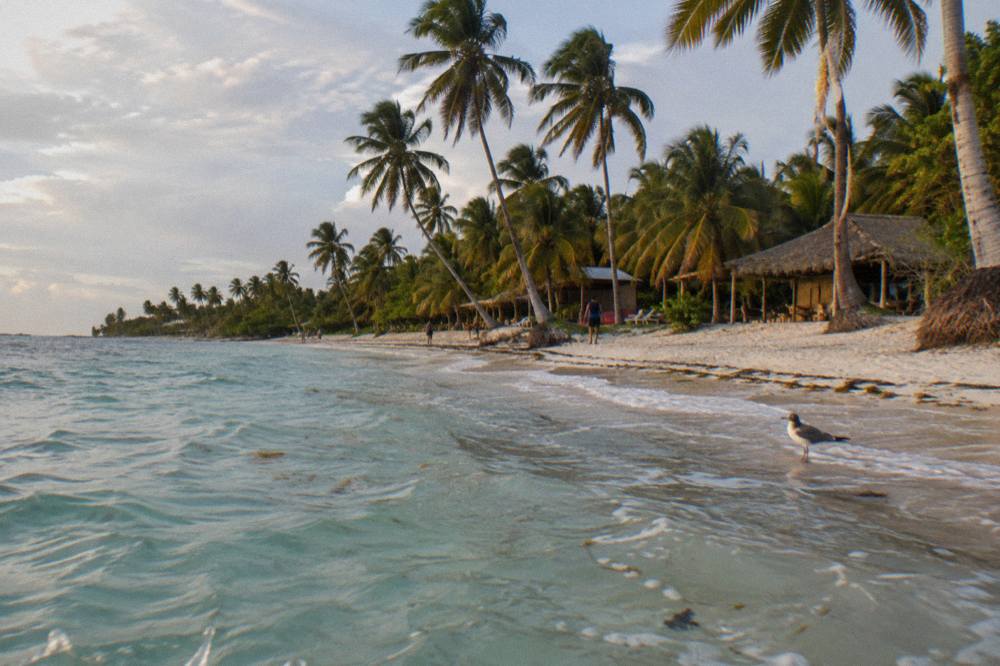
The case for Canto de la Playa is the combination of scale and quiet. The bay is wide, the sand runs on for hundreds of meters, and because it faces south into the sheltered channel between Saona and the mainland, the water is usually calm and shallow a long way out. Operators describe it as the classic postcard shot of the island, and the photos that sell Saona to the world are mostly taken here.
The honest caveat is that "prettiest" and "emptiest" are not the same thing. Canto de la Playa is a scheduled stop on popular routes, so midday it hosts a rotating population of tour groups with buffet tables and bar stations. Arrive early or late in the day, on a small-group or VIP itinerary, and you get something much closer to the brochure. Arrive at noon in high season and you share the sand.
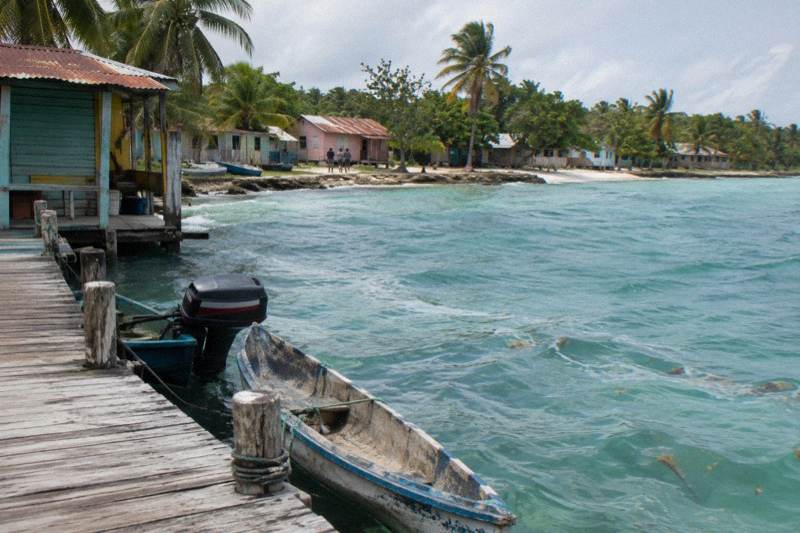
The strongest counter-claim comes from people who prefer Mano Juan, the small fishing village on the island's south side. The beach there is narrower and simpler, but it is a working village beach, with pastel houses, a turtle sanctuary, and a pace that the main beach never has. For travelers who rank character over width of sand, Mano Juan wins.
Readers who want the full island picture, including the map of where each beach sits, can follow the Saona Island map and location guide; those weighing Saona against its neighbor can start with is Catalina or Saona Island better.
If prettiness is the main reason you are booking, these three itineraries all list the southern beaches by name:
Which Beaches Do Saona Tours Actually Stop At?
The roster tours name four kinds of stop: the island's main beach (the big landing beach with buffet service), Canto de la Playa on the south side, the village of Mano Juan, and the Palmilla natural pool sandbar offshore. Not every tour includes every stop; many listings combine speedboat out with catamaran back and fit in only one or two beaches plus the pool. Read the itinerary field before booking, not the title.
This is where most disappointment on Saona comes from, and it is avoidable. A listing titled "Saona Island" does not tell you which Saona you get. The big group catamarans, the ones carrying 30 to 60-plus passengers, mostly run to the main beach, where a buffet lunch and open bar are set up under palms and several operators share the same stretch of sand. It is a fun, easy, sociable day, and the beach itself is genuinely pretty, wide and pale with calm water. It is also the most crowded place on the island.
The smaller and VIP itineraries differentiate themselves by the beaches. Two listings in the site's roster, a VIP four-beach trip and a four-beach Canto de la Playa trip from Punta Cana, are built entirely around stringing together the quieter shores, Mano Juan and Canto de la Playa among them, with the natural pool folded in. A catamaran listing covering Mano Juan, Canto de la Playa and the natural pool does the same three names at a slower pace.
Here is how the four stop types compare, based on what the tour listings and operator guides describe:
| Stop | What it is like | Who lands there | Best for |
|---|---|---|---|
| Main beach | Wide pale sand, buffet and bar stations, most boats, busiest stretch | Large group catamaran and combo tours | Families, easy sociable day, lunch on the sand |
| Canto de la Playa | Long sheltered arc of sand on the south side, palms, calm shallows, fewer boats | Four-beach and VIP itineraries, some catamaran routes | The postcard beach, photos, quieter swimming |
| Mano Juan | Village beach with pastel houses, turtle sanctuary, small bars | Village-stop itineraries, VIP four-beach trips | Character, walking, meeting the island's residents |
| Palmilla natural pool | Offshore sandbar waist-deep water, starfish viewing, 30 to 45 minute stop | Almost all tours | Standing in the middle of the sea, starfish |
Two practical notes carry over to every stop. First, the park bans single-use plastic and foam under a 2023 Ministry resolution, and you are asked not to remove starfish, shells, coral or sand anywhere in the park, with the rule emphasized most at the natural pool. The Ministry's own protected-area visit service page describes the wristband payment system and the day-use rules. Second, most tours bundle the park entry, roughly US$10 to 12 per foreign adult by independent visitor guides, but 11 of the 40 roster listings state it explicitly and the rest are silent, so confirm on the listing to avoid paying twice at the booth.
Why Canto De La Playa Gets The Vote
Canto de la Playa earns the "prettiest" label for three reasons that hold up in person: it is a broad natural sand arc on the island's sheltered side, its water stays calm and shallow because it faces the mainland channel rather than the open Caribbean, and its coconut-palm backdrop has been left standing rather than cleared for buffets and bars. It is the beach that looks like the photograph, even on a busy day.
The geography does the heavy lifting. Saona's south side faces the open Caribbean, and the water along its beaches stays calm and shallow close to shore. The result is water that is usually glassy and waist-deep well out from shore, in the turquoise-to-emerald range that prints well and swims better. The palm grove behind the sand gives shade without structures.
The sand itself is the other half of the argument. It is pale and fine, and the bay curves long enough that even with a tour group present, the ends of the beach stay quiet. Operators that run four-beach itineraries treat Canto de la Playa as the centerpiece stop, and their listing copy leans on it for a reason.
It is not flawless. Sargassum weed reaches the Dominican southeast in variable amounts, and while Saona's south and west shores are often clearer than the east coast around Punta Cana, nobody can promise a weed-free day, so ask your operator the morning of the trip. Rain matters too: the dry season runs December to April, with February and March the driest months at around 40 mm each on 30-year averages, while September is the wettest at about 175 mm, per the long-run precipitation record for the island. The best-time-to-visit question is covered in full in the best time to visit Saona Island guide.
Is Mano Juan The Real Answer?
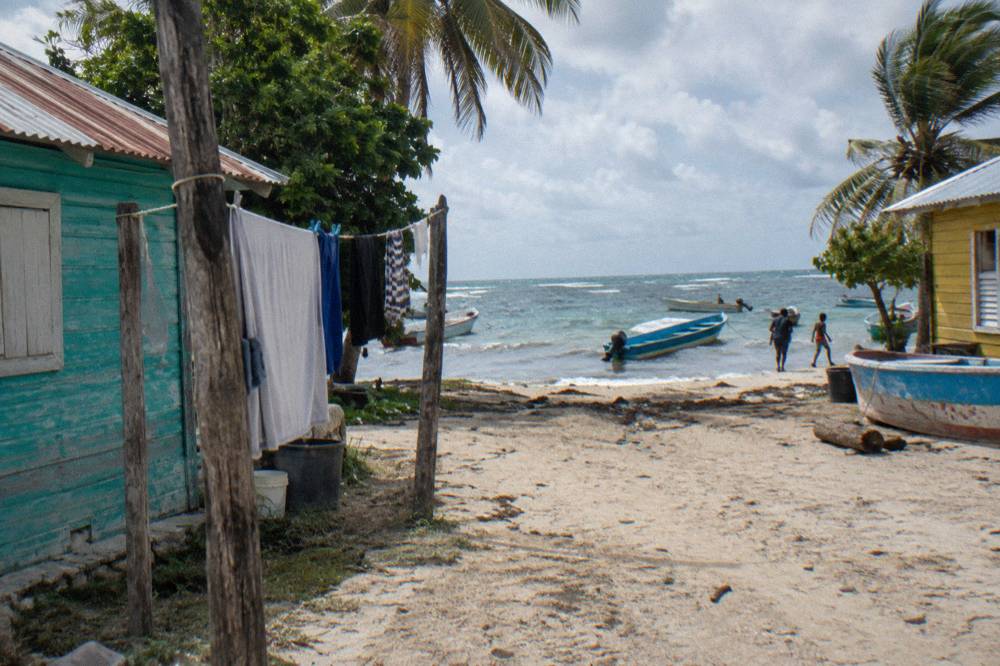
Mano Juan is the beach for travelers whose definition of "prettiest" includes people and place rather than just sand. It is a small, live fishing village with pastel-painted wooden houses, a modest village beach, a tortuga (turtle) sanctuary, and a couple of simple beach bars, and tour groups that stop here get 30 to 60 minutes of a genuinely inhabited Caribbean shore rather than a catering operation.
The village is the only settlement on the island, home to a small number of families who live there year-round. That alone makes it unlike every other stop: there are drying nets, chickens, school-age kids on bicycles, and a main street of sand. The beach itself is narrower than Canto de la Playa and the water is less dramatic, but the setting, houses against palms against sea, photographs like nowhere else on the island.
The turtle sanctuary is the anchor visit. It is a small, informal, community-run hatchery for sea turtles, and tours that stop in Mano Juan often include a short visit. Combined with a walk down the sand street and a fresh coconut or a beer at a village bar, the stop is the closest thing Saona offers to meeting the island rather than looking at it. The turtle sanctuary and Mano Juan guide covers it in depth.
The honest limitation is time and tide. Because most itineraries treat Mano Juan as one stop among three or four, you rarely get more than an hour here, and the beach is not a swimming beach in the way Canto de la Playa is. If the village is the part of the day you are most excited about, pick an itinerary that names it explicitly in the listing, and check the scheduled stop length on the tour's page before you book. The catamaran itinerary featured on this site lists Mano Juan, Canto de la Playa and the natural pool together, which is why it makes a sensible pick for village-minded readers; its free-cancellation policy is stated on the listing.
What About The Natural Pool At Palmilla?
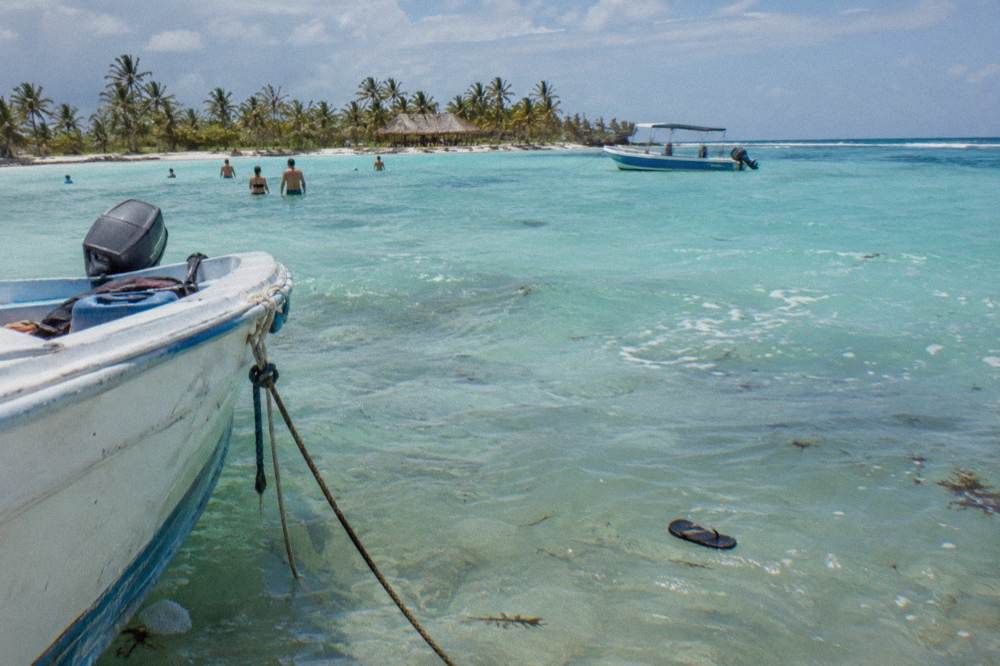
The Palmilla natural pool is not a beach in the ordinary sense: it is a vast sandbar a short ride offshore where the water stands waist-deep and gin-clear, and it is the stop nearly every Saona tour includes, usually for 30 to 45 minutes. As a "prettiest" contender it wins on water rather than sand, and it is where the island's famous starfish are seen, from a respectful, hands-off distance.
Boats anchor on the sandbar and passengers simply step into the sea, which is bathtub-warm and only knee to waist deep for most of the area. Guides point out the starfish that sit on the sand, and the park rule is strict: look, do not touch, and never lift one out of the water for a photo. The Ministry of Environment, which runs Parque Nacional Cotubanamá, repeats this on its visitor guidance, and crews enforce it.
As an experience, the pool is the most reliably delivered stop on the island. Sea state can change a beach landing, a village stop can be shortened, but the sandbar is almost always on the route, and the combination of standing in open water with a drink in hand is what many day-trippers remember longest. For the full picture, including why the starfish rule matters so much, see the natural pool and starfish guide.
A planning note worth one paragraph: the pool stop is short by design. If your mental image of Saona is an afternoon floating at Palmilla, adjust it to a half-hour swim break between beach stops, and choose your tour by the beaches that bracket it. Solo time at the sandbar is essentially only available on private charters, which the roster prices from US$820 per group, a different budget conversation covered in the private tour guide.
Which Tour Should You Book For The Beaches You Want?
Book a group catamaran tour (roughly US$63 to 116 per person) if the main beach plus the natural pool is enough, and pick a small-group or VIP speedboat trip (US$75 to 169) when you want Canto de la Playa and Mano Juan by name. For one day stringing the pretty southern shores together, a four-beach itinerary does exactly that, but confirm park entry is listed as included before you compare prices.
The price bands come from the 40 tours listed here, and they map onto beach access more cleanly than most travelers expect. The main-beach day is the value option: buffet lunch, open bar, natural pool stop, and a wide pretty beach with crowds attached. The VIP and four-beach products charge more for exactly two things, fewer fellow passengers and the quieter beaches, and if Canto de la Playa is your answer to this article's question, that premium is what buys it.
| If your priority is... | The stop that delivers it | Itinerary type to look for | Roster price band (per person) |
|---|---|---|---|
| The postcard beach, quiet as possible | Canto de la Playa | VIP or four-beach itinerary | US$75 to 169 |
| Village character and the turtle sanctuary | Mano Juan | Itineraries listing Mano Juan by name | US$75 to 169 |
| Easy sociable day, lunch on the sand | Main beach | Group catamaran or combo tour | US$63 to 116 |
| Standing in the sea, starfish nearby | Palmilla natural pool | Nearly all tours | Included in all bands |
| No other groups at all | Any beach, your schedule | Private charter (per group) | US$820 to 1,490 per group |
Departure logistics matter too, because every boat leaves from the Bayahibe pier regardless of where your hotel is. Punta Cana and Bavaro guests are collected by road transfer, usually starting between 6:30 and 8:00 AM, with the drive to Bayahibe taking about an hour from the airport or the Bavaro hotel zone. The full door-to-door day runs 6 to 12 hours across the roster. The how to get to Saona Island guide has the transfer detail, and the tour price and what's included guide breaks down what each band buys.
One last matching tip: read the exclusions as closely as the inclusions. Only 11 of the 40 tours listed here spell out national park entry as included; where a listing is silent, budget roughly US$10 to 12 in pesos at the booth and ask the operator in advance. Beach choice decides your day, but a double-paid fee is the fastest way to sour it.
The four-beach itinerary from Punta Cana is the mid-band pick that names Canto de la Playa directly:
For a broader comparison of how these itinerary styles differ, the Saona Island tour types compared guide lays out catamaran, speedboat, small-group and private formats side by side, and this site's Saona Island Dominican Republic Tours homepage lists the full current roster; live availability shows on each listing.
Whichever beach wins your personal vote, book the itinerary that names it, not the one with the best title.
Common Questions About The Prettiest Beach On Saona Island
What Is The Prettiest Beach On Saona Island?
Canto de la Playa, the long sheltered arc of pale sand on the island's south side, is the beach most often named the prettiest, and several tours list it as a stop. Mano Juan is the answer for travelers who prefer a living village beach, while the Palmilla natural pool wins on water alone.
Can You Visit More Than One Beach On Saona In A Day?
Yes. Four-beach and VIP itineraries are built to string several shores together in one day, typically including Canto de la Playa and Mano Juan plus the natural pool. Standard group tours visit one main beach plus the pool. Check the itinerary field on the listing.
Is The Main Saona Beach Worth It If I Cannot Get To Canto De La Playa?
Yes. The main landing beach is wide, pale and calm, with buffet lunch and bar service under the palms. It is simply the busiest stretch on the island, so go expecting a sociable day rather than a quiet one.
Do All Saona Tours Stop At The Natural Pool?
Nearly all do, usually for 30 to 45 minutes. The pool is a sandbar rather than a beach, the water is waist-deep and clear, and the starfish there must not be touched or lifted, per park rules.
Is The Park Entry Fee Included In The Tour Price?
Only 11 of the 40 Saona tours explicitly include national park entry in the price. Where a listing is silent, expect to pay roughly US$10 to 12 per foreign adult at the booth, and confirm with your operator before the day.
How Long Do You Actually Get On Each Beach?
It varies by itinerary. Four-beach tours typically give each stop under an hour, while the main beach on a group tour is usually the longest stay, built around buffet lunch. Stop lengths are usually described on the tour's listing.