What Is Special About Saona Island?
Saona Island is the protected heart of Parque Nacional Cotubanamá: a natural pool sandbar, wild beaches reachable only by tour boat from Bayahibe, and starfish-filled shallows. Here is what sets it apart and what a visit costs.
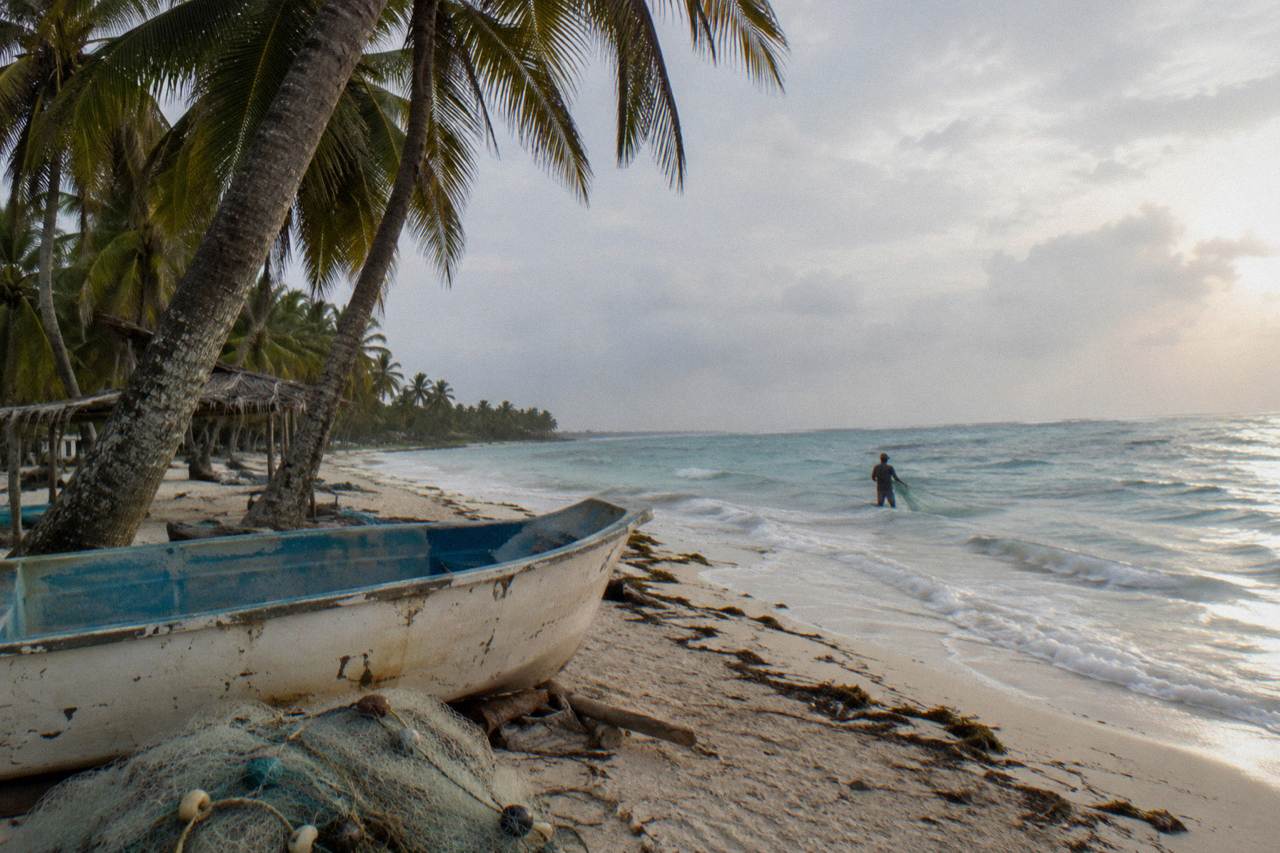
Saona Island lies off the southeast coast of the Dominican Republic, inside Cotubanamá National Park that belongs, in its entirety, to Parque Nacional Cotubanamá. There are no hotel towers on it, no cruise-ship pier, no souvenir mall. A fishing village called Mano Juan, a handful of park-controlled beach zones, and a shallow sandbar in the middle of the Caribbean Sea are basically the whole story. That scarcity is the point.
Most visitors arrive on a paid day trip, because there is no scheduled public ferry and no independent boat access to a protected park island. The tours themselves are the main practical route in, and they run from roughly US$63 to US$169 per person depending on format, with private boat charters priced per group at US$820 to 1,490. Before unpacking what makes the island itself special, here are three day-trip formats that cover the classic highlights. For the backstory, the full story of Saona Island's fame covers the beaches, the protected reserve, and the tour operation that turned this stretch of coastline into the country's signature excursion.
Saona Island is special because it is a protected national park island with no resorts, no roads and no permanent tourism infrastructure, reachable only by organized boat from the Bayahibe pier. Its signature feature is the Piscina Natural, a waist-deep sandbar in open turquoise water, plus wild palm-lined beaches and strictly protected marine life. Roughly US$10 to 12 in park entry, often bundled into the tour price, buys access to all of it.
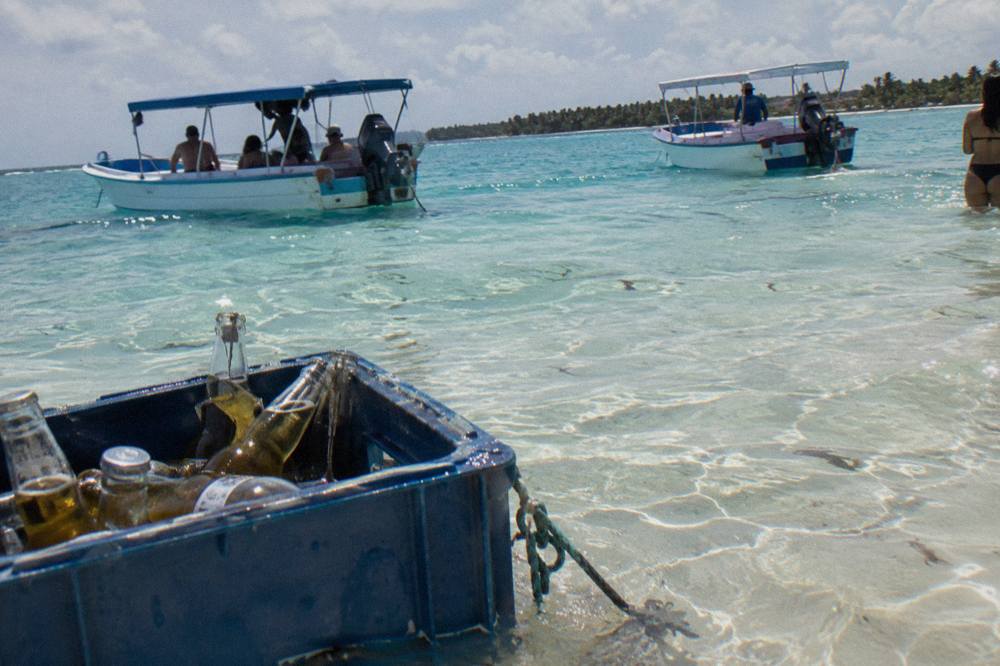
Start with the geography. Saona sits off the Dominican Republic's Caribbean coast, shielded from the open Atlantic by the island's own mass. That position matters in two practical ways. First, the crossing is usually gentle: speedboats cover the distance in roughly 20 to 60 minutes and catamarans in 1 to 2 hours, depending on sea state and operator. Second, the island's south and west beaches are often clearer of sargassum seaweed than the east-facing Punta Cana and Bávaro strands, because conditions vary day to day, so ask your operator. Often, not always; seaweed varies day to day and season to season, so ask your operator about conditions rather than assuming.
Then there is the protection itself. The island falls under Parque Nacional Cotubanamá, administered by the Ministry of Environment, which is why the rules feel different from a resort beach. Single-use plastic and foam are banned in the park under Resolución 0024-2023, signed at Mano Juan itself. You cannot remove starfish, shells, coral or sand, and the rule is actively enforced at the natural pool, where the shallow water hosts the starfish that appear in half the photos of the Dominican Republic online. Day visits only: no overnight stays or camping without a Ministry booking. If you were hoping to sleep on the beach itself, our guide to spending the night on Saona Island explains what a Ministry booking actually involves and where most visitors stay instead.
The park's own service page explains that general visitors pay by wristband at the site, with schools and institutions exempt, but it publishes no price list; independent visitor guides put the foreign-adult fee at roughly US$10 to 12, and most organized tours bundle it so you do not pay twice. The Ministry's protected-area visitation service page is the official reference for the wristband system.
Finally, there is the atmosphere. Because access is controlled and the island has no development beyond Mano Juan and a few palm-thatch structures, the beaches look the way postcards pretend all Caribbean beaches look. The trade-off is crowds at peak times, since everyone arrives by boat and the boats cluster at the same few beach zones. Going small-group or private buys space; going standard group buys price. That trade-off is the real decision on a Saona trip, and it runs through everything below.
Why Is Saona Island So Famous?
Saona became famous through scale and imagery: an enormous natural swimming pool in the middle of the sea, dense starfish in waist-deep water, and palm-fringed white sand that travel brochures and film scouts have used for decades. It is now one of the most widely offered day trips from Punta Cana and Bávaro, reached by road to Bayahibe and then by speedboat or catamaran.
The fame is partly a movie story, and partly honest geography. Film-industry lore connects Saona to the Pirates of the Caribbean productions, and much of that is unverified: claims that these beaches have served as Caribbean backdrops for advertising and cinema circulate in tourist accounts, though no specific production has been named, which is how the images travelled. The full story of Saona and the Pirates of the Caribbean films separates the verified parts from the legend.
The verified part of the fame is the natural pool. Formally the Piscina Natural, near Palmilla, it is a sandbar where the sea stays knee-to-waist deep far from shore, warm and usually calm. Tour itineraries typically give it 30 to 45 minutes, enough to stand in clear water, see starfish on the sand, and take the photograph most visitors came for. The starfish are protected: touching them is discouraged and removing them is illegal under park rules, a point crews repeat at the stop itself.
The third pillar of fame is simply the beaches: Canto de la Playa, the busier main beach zone, and the stretches near Mano Juan. Which one your boat uses depends on the operator and the day, so if a specific beach matters to you, check the listing before booking rather than assuming. Mixed itineraries often run speedboat out and catamaran back, which doubles the scenery: open-sea spray on the way, drinks and music on a deck on the way home.
Word of mouth did the rest. Saona now anchors the excursion menu of the entire east coast, from Punta Cana resorts to the growing cruise operation at La Romana. MSC has made La Romana a year-round homeport with weekly Southern Caribbean sailings, and its itineraries include excursion options toward Saona, which adds cruise-passenger demand on top of hotel-based demand. Popularity has a cost in crowds, which is why the format you choose matters as much as the decision to go.
The Natural Pool And The Beaches: What You Actually See
The two signature sights are the Piscina Natural, a shallow sandbar in open sea where tours stop for about 30 to 45 minutes, and the island's beach zones, Canto de la Playa and the Mano Juan stretches, where the buffet lunch and swimming time happen. Most tours combine both, plus a village stop on some itineraries. Which stops run depends on the operator and sea conditions.
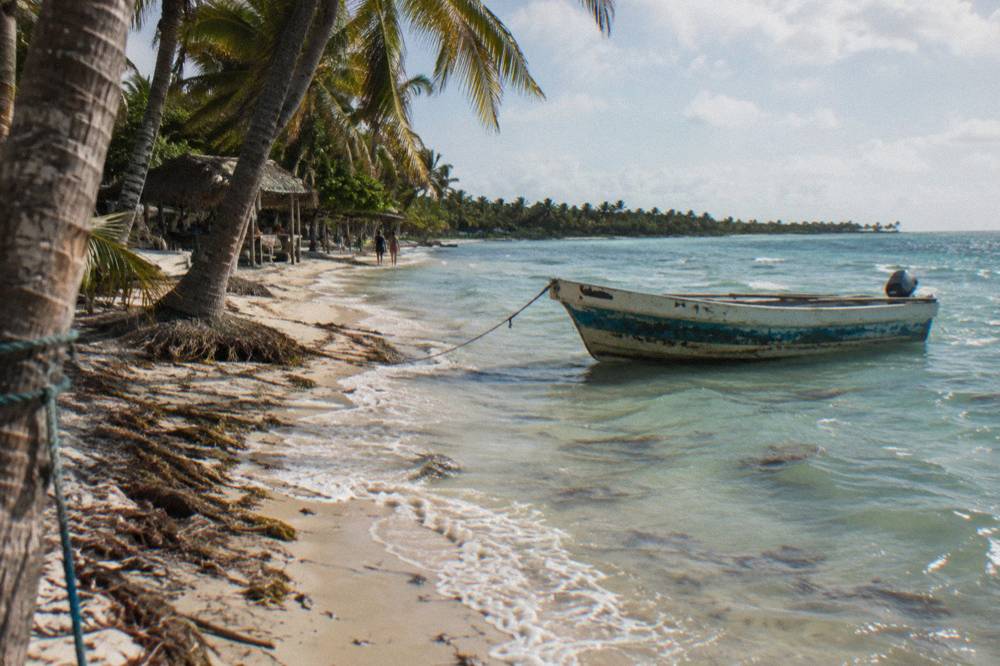
The natural pool is the headline. It sits in open water between Bayahibe and the island, and the sandbar keeps the water shallow and usually still even when the sea beyond has chop. Because it is a protected zone, the starfish there are the draw and the obligation: look, do not touch, do not lift them for a photo. Crews hand out no souvenirs from the water, and neither should you pocket shells or coral; park rules forbid removing any of it.
The island beaches divide by character. The main beach zone holds the largest volume: rows of palm-thatch shelters, the buffet setups, beach-bar service and the crowd that comes with a boat-load schedule. Canto de la Playa, backed by palm forest, is the quieter, more photographed bay, used by smaller operations. Mano Juan, the fishing village, appears on some itineraries as a short walk-through: pastel houses, a turtle conservation project and a genuinely local pace of life, detailed in the turtle sanctuary and Mano Juan guide.
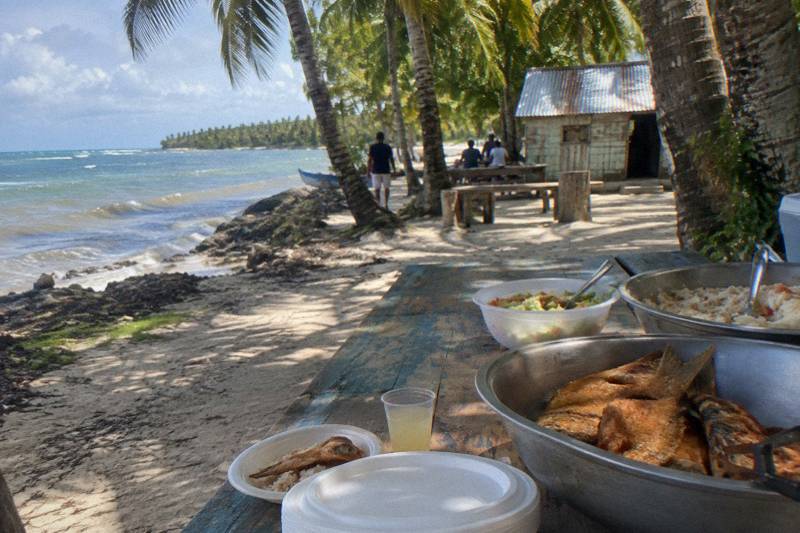
What the day looks like, on the standard format, is roughly this: an early hotel pickup, usually starting between 6:30 and 8:00 a.m. depending on your zone; a road transfer to Bayahibe of about 60 to 90 minutes from the Bávaro hotel zone; the crossing; the natural pool stop; beach time with a Dominican buffet lunch, typically grilled chicken or fish, rice, salads and fruit; and the return leg by catamaran or speedboat. Total duration runs about 6 to 12 hours door to door across the 40 Saona tours available, with 7 to 11 hours the common band.
Not every tour includes every stop. Some skip the village, some skip the natural pool in favour of a snorkel stop, some reverse the boat order. The listing states the itinerary; read it against what you actually want from the day before choosing on price alone.
How Much Does It Cost To Visit Saona Island?
Verified from-prices across the roster: group catamaran day trips run US$63 to 116 per person, small-group and VIP speedboat trips US$75 to 169, Santo Domingo departures US$87.90 to 130, and private boat charters US$820 to 1,490 per group. The median per-person from-price is US$100. Most tours bundle lunch, drinks, transfers and often the park entry.
Here is the price structure for all 40 Saona Island tours in one table.
| Format | Verified from-price range | Basis | What the price usually covers |
|---|---|---|---|
| Group catamaran or mixed day trip | US$63 to 116 | Per person | Boat transfers, buffet lunch, open bar, hotel pickup where listed |
| Small-group or VIP speedboat trip | US$75 to 169 | Per person | Smaller group, speedboat format, lunch and drinks |
| Santo Domingo departure | US$87.90 to 130 | Per person | Longer road transfer each way, standard day package |
| Private boat charter | US$820 to 1,490 | Per group | Exclusive vessel, custom timing, price split across your party |
The park entry fee sits on top where it is not bundled. Only 11 of the 40 tours on the roster explicitly list national park entry as included; the other 29 say nothing, which means you should confirm with the operator before departure rather than assume. Where it is paid separately, budget roughly US$10 to 12 per foreign adult, paid at the booth; the Ministry publishes no official price list, so treat every figure as approximate and confirm with your operator to avoid paying twice.
Two further cash lines exist. Tips are not included in tour prices, and common guidance for a full-day tour runs US$10 to 20 per person total for guide and crew, in small bills. Extras on the island, from beach-vendor souvenirs to photo packages, cost a few dollars and are paid in cash on the day. The full price and inclusions guide breaks the roster down line by line.
Price, in short, buys format rather than access: everyone lands on the same protected island. The gap between US$63 and US$169 is the gap between a 60-person catamaran day and a small-group speedboat day, not between two different islands. Decide which day you want first, then match the price.
The all-inclusive trip from Punta Cana is the format most first-time visitors settle on, because it puts pickup, boats, lunch, drinks and beach time into one booking with nothing left to coordinate on the day. Check availability on the operator's live listing before peak-season dates fill.
Getting There: Why Every Trip Starts In Bayahibe
All boats to Saona leave from the Bayahibe and Dominicus pier area; there are no departures from Punta Cana or Bávaro beaches. Tours from the east-coast resorts include a road transfer of about 60 to 90 minutes from Bávaro, or about 58 minutes from Punta Cana airport by the free-flow estimate, before the boat leg. No public ferry exists.
The geography forces the pattern. Saona lies inside a national park on the Caribbean side of the coast, and Bayahibe is the permitted access point. If you are staying in Punta Cana or Bávaro, your day starts with a coach or minibus ride along the Autopista del Coral to the pier, then the crossing. If you are staying in Bayahibe or Dominicus itself, the pier is minutes away, which is why many travellers base there deliberately; the Bayahibe and La Romana departure guide covers that option.
Drive time to the Bayahibe pier: Punta Cana airport about 58 minutes (69.7 km), the Bávaro hotel zone about 59 minutes, La Romana about 24 minutes, Dominicus about 6 minutes, and Santo Domingo about 113 minutes. Operators quote 60 to 90 minutes from Bávaro in practice, matching the routing estimate once hotel-zone pickups are included. Full-day trips run about 6 to 12 hours door to door across the roster.
The December 2025 opening of a new visitor parking facility at Playa Bayahibe, with sidewalks, drainage, signage and a pedestrian bridge, invested about RD$213 million and reduced the congestion that used to define the embarkation point. It is a small thing, but it changed the first and last half hour of the day for the better.
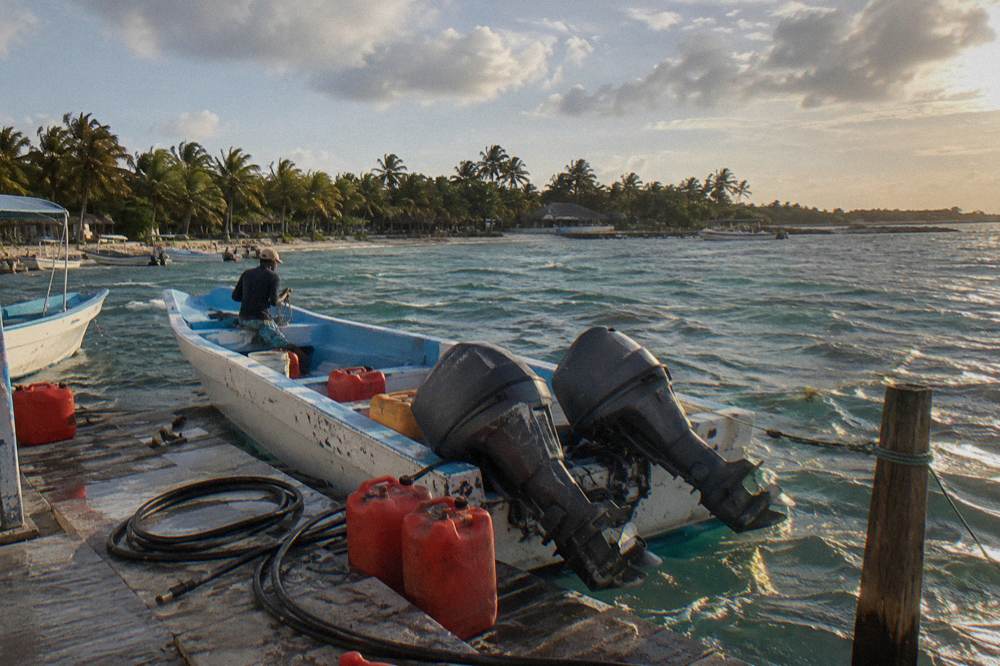
Independent access exists only in a marginal sense: informal local boats, lanchas, run from the Bayahibe working dock toward Mano Juan village when full, negotiated on the spot, with the park fee on top and the return time pre-agreed. That is a different product from an organized excursion, without lunch, open bar, the natural pool stop or any recourse if the return never materializes. For almost everyone reading this, the tour is the sensible route.
How Is Saona Different From The Punta Cana Beaches?
Saona is a protected park island with no development and boat-only access, while Punta Cana and Bávaro are contiguous resort beaches you can walk onto. Saona's south-west aspect often means less sargassum than the east-facing resort coast, its water stays shallow and calm at the natural pool, and its marine life is legally protected. You trade convenience for scenery.
The sargassum point deserves precision, because it is the most over-sold claim in east-coast travel. 2026 was a heavy sargassum year regionally, and Saona's position deflects much of the drifting weed westward, so its south and west beaches are often clearer than Punta Cana's. Often is the operative word: no operator can promise clean water on a given day, conditions vary, and honest crews will tell you the current state if you ask. Anyone who promises sargassum-free water is selling you something.
The second difference is what "protected" means in practice. On a resort beach, the rule set is the hotel's. On Saona, it is the Ministry of Environment's: no single-use plastic or foam, no removing starfish, shells, coral or sand, day visits only. The reefs and turtle nesting that make the island ecologically interesting are the reason the island still looks the way it does, which is the quiet argument for following the rules rather than resenting them.
The third difference is rhythm. A Punta Cana beach day is a resort day: you come and go. A Saona day is a scheduled expedition: one pickup, one crossing, a fixed sequence of stops, one return. That structure is a feature for most visitors, since everything from lunch to drinks is handled, and a constraint for travellers who like to move on their own clock. Choosing between the two comes down to which of those days you want; the Punta Cana versus Bayahibe comparison works through the same trade-off for where to stay.
For visitors weighing Saona against its nearby rival island, the Saona versus Catalina comparison covers the differences in snorkelling, crowds and format; Catalina is a separate protected monument with its own character and its own access route from La Romana.
One format choice makes the contrast concrete: a small-group or VIP speedboat trip gets you to the island's quiet corners before the catamaran fleets land, which is the closest a day visitor gets to seeing Saona as it was before the brochure era.
When Should You Go, And What Should You Bring?
The dry season, December to April, is the most reliable window: sunny, less humid and with generally calmer seas, at the cost of peak crowds and prices. May to June and November are good value with fewer visitors. Bring reef-safe sunscreen, a refillable bottle, cash for the park fee where unbundled, tips and extras, and dry storage for electronics.
The seasonal pattern on the southeast coast is straightforward. Dry season runs December to April; wet season May to November, with September and October the wettest months on 30-year averages, around 175 mm and 158 mm respectively, against roughly 40 mm in the driest months of February and March. The Atlantic hurricane season runs June 1 to November 30, peaking mid-August to mid-October. None of this is a prediction for your week: it is a planning base, and operators cancel or reroute for rough seas, usually with a full refund when they cancel.
Packing is dictated by the park rules as much as the sun. Single-use plastic and foam are banned, so a refillable bottle is not just good practice, it is compliance. Reef-safe sunscreen matters for the same reason. Cash covers the park entry where it is not bundled, tips for the crew, and anything you buy on the beach; card infrastructure on a park island is not something to rely on. The what to bring and wear guide has the full checklist.
Timing within the day matters too. Early pickups, usually from 6:30 a.m., feel brutal but deliver: you cross before the fleet, and the natural pool and first beach stretch are at their quietest before late morning. Late risers get the same island at maximum occupancy. On a protected island where everyone funnels through the same few zones, the schedule is the crowd-control tool you control.
If you are travelling with children, the shallow natural pool and calm bays make Saona one of the more family-friendly excursion formats on the coast; the Saona with kids guide covers the practicalities, from discounted child rates to the day's length. Whatever the season, book the format that matches your tolerance for company: this is one island, and how you visit it defines how you experience it.
Why Saona Deserves The Day
Saona deserves your full day because it delivers the Caribbean postcard in real life: wide ribbons of white sand, calm turquoise shallows, and swaying palms, all wrapped in protected parkland that feels worlds away from resort crowds, and reaching it by boat across open water is half the magic, so rushing it would mean missing the slow, sun-soaked rhythm that makes the island unforgettable.
The decision that matters is format. Group catamaran trips from US$63 per person deliver the classic day at the lowest price. Small-group and VIP speedboat trips from US$75 to 169 buy early arrivals and elbow room. Private charters from US$820 per group buy the island on your own clock. All three land on the same protected sand. For planning the wider trip, the complete Saona Island guide covers the island in depth, and Saona Island Dominican Republic Tours lists all 40 Saona tours with prices and reviews.
Common Questions About Saona Island
What Is Special About Saona Island?
It is a fully protected national park island with no resorts or roads, reachable only by organized boat from Bayahibe. Its signature sights are the Piscina Natural, a waist-deep sandbar in open turquoise water, protected starfish, and wild palm-lined beaches such as Canto de la Playa and the Mano Juan stretches.
Can You Visit Saona Island On Your Own?
Not in any practical sense. There is no scheduled public ferry, and access to the protected park island runs through organized tour boats from the Bayahibe pier. Informal local boats to Mano Juan village exist but are a different product, negotiated on the spot with the park fee on top and the return time pre-agreed.
How Much Does A Saona Island Trip Cost?
Verified from-prices across the roster: group catamaran day trips US$63 to 116 per person, small-group and VIP speedboat trips US$75 to 169, Santo Domingo departures US$87.90 to 130, and private boat charters US$820 to 1,490 per group. Most prices include lunch, drinks, boat transfers and often hotel pickup; the park entry, roughly US$10 to 12 per foreign adult, is bundled on many tours, so confirm with your operator.
How Long Is The Boat Ride To Saona Island?
Usually 20 to 60 minutes by speedboat and 1 to 2 hours by catamaran, depending on the sea and the operator. Many mixed itineraries run speedboat out and catamaran back, so the two legs of your day can differ in both time and character.
Is Saona Island Affected By Sargassum Seaweed?
It varies by day. Saona's south and west beaches are often clearer than the east-facing Punta Cana and Bávaro coast because the island deflects drifting weed westward, but no beach is guaranteed clear, and 2026 was a heavy sargassum year regionally. Ask your operator about current conditions before booking.
Are There Hotels On Saona Island?
No tourism hotels. The island is day-use only within Parque Nacional Cotubanamá, and overnight stays require a Ministry of Environment booking. Visitors sleep in Bayahibe, Dominicus, La Romana or the Punta Cana resort zone and visit the island on a day trip.